Lithium Carbonate → HCID 12967330, compound
Reaction equation

C1C=C[NH+]=CC=1.Br[Br-]Br.[Cl:10][C:11]1[CH:12]=[CH:13][CH:14]=[C:15]2[C:23]=1[N:22]([CH2:24][C:25]1[CH:30]=[CH:29][C:28]([F:31])=[CH:27][CH:26]=1)[C:21]1[CH2:20][CH2:19][CH2:18][C:17](=[O:32])[C:16]2=1.[Br-].[Li+].C(=O)([O-])[O-].[Li+].[Li+]>C1COCC1.CN(C=O)C>[Cl:10][C:11]1[CH:12]=[CH:13][CH:14]=[C:15]2[C:23]=1[N:22]([CH2:24][C:25]1[CH:30]=[CH:29][C:28]([F:31])=[CH:27][CH:26]=1)[C:21]1[CH:20]=[CH:19][CH:18]=[C:17]([OH:32])[C:16]2=1Participants
Reactant 3

Product 1

Reagents, catalysts & solvents 2


Conditions
- Temperature
- 75 °C
Procedure
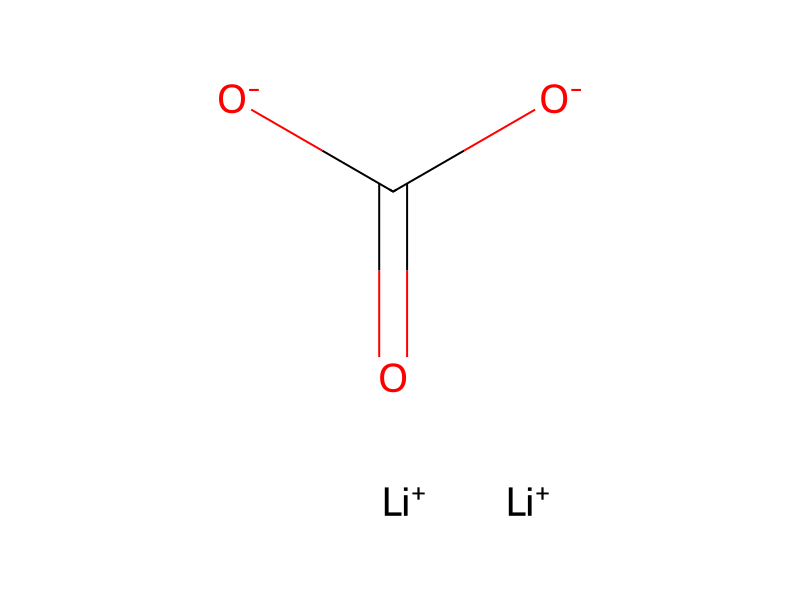
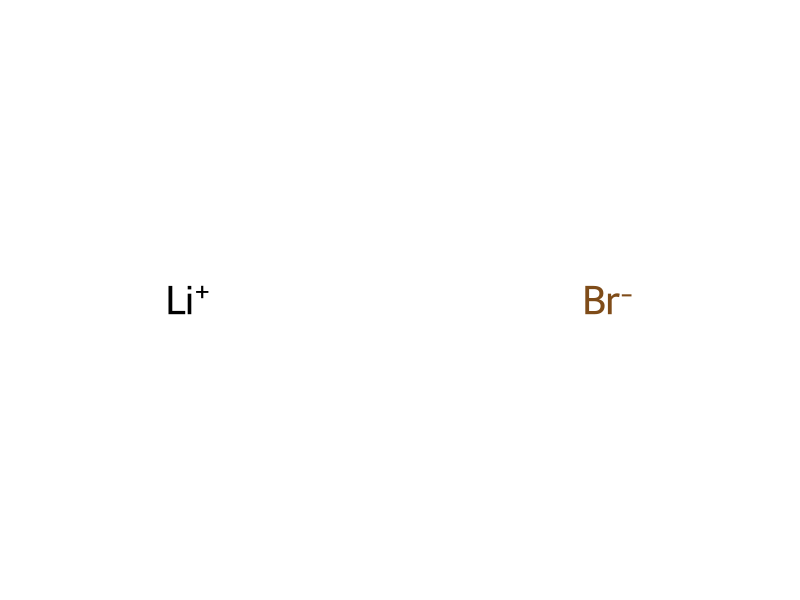
Pyridinium bromide perbromide (0.1988 g, 0.62 mmol) is added to a solution of 8-chloro-9-(4-fluorobenzyl)-1,2,3,9-tetrahydro-4H-carbazol-4-one in THF (0.7 mL) and DMF (0.5 mL) and the mixture is heated to 75° C. After stirring for 5.5 h, THF is removed under reduced pressure and the residue is partitioned between dichloromethane and brine. The combined organic layers are washed with dilute sodium sulfate/brine and the aqueous layer is backwashed with dichloromethane. The combined organic layers are dried over magnesium sulfate and concentrated under reduced pressure to give a residue. A mixture of the resulting residue, lithium bromide (0.0976 g, 0.0011 mol), lithium carbonate (0.0762 g, 0.0010 mol) and DMF (2 mL) is heated at 120° C. for two hours. The DMF is then removed under high vacuum and the residue is partitioned between dichloromethane and water. The combined organic layers are dried over sodium sulfate and concentrated to an oil. The oil is chromatographed on silica gel (80 mL) using 15% ethyl acetate in heptane/dichloromethane (6:1) to give 0.1199 g (72%) of the title compound; mp 142-145° C.; MS (ESI−) for C19H13ClFNO m/z 324.1 (M−H)−; IR (drift) 3521, 1591, 1508, 1457, 1416, 1351, 1337, 1311, 1269, 1226, 1218, 1110, 852, 791, 736 cm−1; 1H NMR (CDCl3) δ5.38, 5.94, 6.60, 6.93, 7.06, 7.18, 7.26, 7.36, 8.29. Anal. Calcd for C19H13ClFNO: C, 70.05; H, 4.02; N, 4.30. Found: C, 69.26; H, 4.05; N, 4.20.
Workup
- customTHF is removed under reduced pressure
- customthe residue is partitioned between dichloromethane and brine
- washThe combined organic layers are washed with dilute sodium sulfate/brine
- dry with materialThe combined organic layers are dried over magnesium sulfate
- concentrationconcentrated under reduced pressure
- customto give a residue
- temperatureis heated at 120° C. for two hours
- customThe DMF is then removed under high vacuum
- customthe residue is partitioned between dichloromethane and water
- dry with materialThe combined organic layers are dried over sodium sulfate
- concentrationconcentrated to an oil
- customThe oil is chromatographed on silica gel (80 mL)
Sources & evidence
- ORD record
- ord-c8b33addabe14f24a6521b8be4b02f0e
- Source dataset
- uspto-grants-2003_02
- Patent number
- US06514968B1
Reaction notes
Loading…