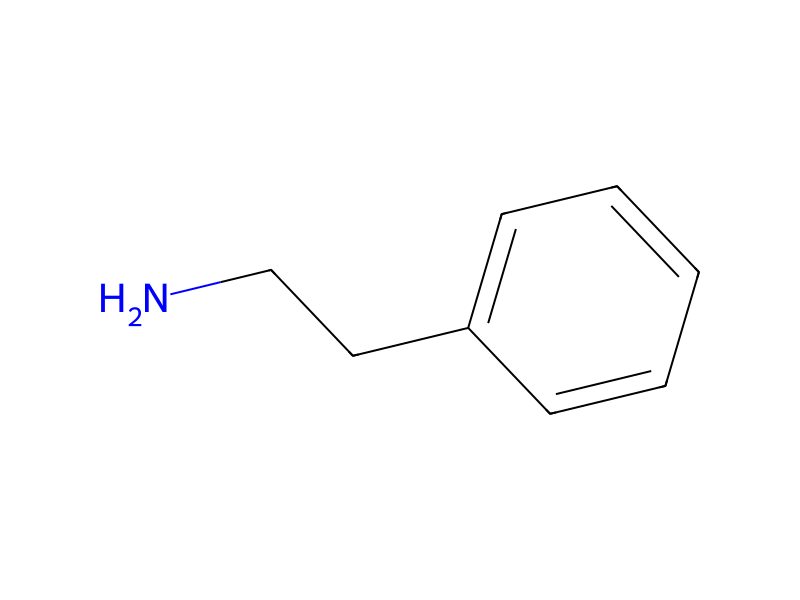
Phenethylamine → HCID 18628782, compound
Reaction equation

Cl[C:2]([CH:4]([CH2:10][CH:11]1[CH2:16][CH2:15][CH2:14][CH2:13][CH2:12]1)[C:5]([O:7][CH2:8][CH3:9])=[O:6])=[O:3].[CH2:17]([NH2:25])[CH2:18][C:19]1[CH:24]=[CH:23][CH:22]=[CH:21][CH:20]=1.CN1CCOCC1>C(OCC)(=O)C>[CH:11]1([CH2:10][CH:4]([C:2]([NH:25][CH2:17][CH2:18][C:19]2[CH:24]=[CH:23][CH:22]=[CH:21][CH:20]=2)=[O:3])[C:5]([O:7][CH2:8][CH3:9])=[O:6])[CH2:16][CH2:15][CH2:14][CH2:13][CH2:12]1Participants
5
Reactant 3


Product 1

Reagents, catalysts & solvents 1

Procedure
A mixture of ethyl 2-chlorocarbonyl-3-cyclohexylpropionate (2.65 mmol), phenethylamine (0.376 mL, 3 mmol) and N-methylmorpholine (0.44 mL, 4 mmol) in ethyl acetate (6 mL) was cooled to between −20 and −10° C. and stirred for 15 minutes. The mixture was allowed to warm to room temperature, stirred for approximately 12 hours and then diluted with ethyl acetate (5 mL) and ice (5 mL). The organic layer was separated, washed with cold 0.05 N hydrochloric acid, sodium bicarbonate solution and brine, dried (MgSO4) and concentrated to provide ethyl 2-cyclohexylmethyl-N-phenethylmalonamate (366 mg, 1.106 mmol).
Workup
- temperaturewas cooled to between −20 and −10° C.
- stirringstirred for approximately 12 hours
- customThe organic layer was separated
- washwashed with cold 0.05 N hydrochloric acid, sodium bicarbonate solution and brine
- dry with materialdried (MgSO4)
- concentrationconcentrated
Sources & evidence
- ORD record
- ord-2eeb6908940848a5b79841cfbc11c8a3
- Source dataset
- uspto-grants-2003_02
- Patent number
- US06525036B2
Reaction notes
Loading…