2,3-Dichloro-5,6-dicyano-1,4-benzoquinone → N-Benzyloxan-4-amine
Reaction equation

C([C:3]1[C:9](=O)[C:8](Cl)=[C:7](Cl)[C:5](=O)[C:4]=1[C:13]#[N:14])#N.[O:15]1[CH2:20][CH2:19][C:18](=O)[CH2:17][CH2:16]1.C(N)C1C=CC=CC=1>C1(C)C=CC=CC=1.ClCCCl.C(Cl)Cl>[CH2:13]([NH:14][CH:18]1[CH2:19][CH2:20][O:15][CH2:16][CH2:17]1)[C:4]1[CH:3]=[CH:9][CH:8]=[CH:7][CH:5]=1Participants

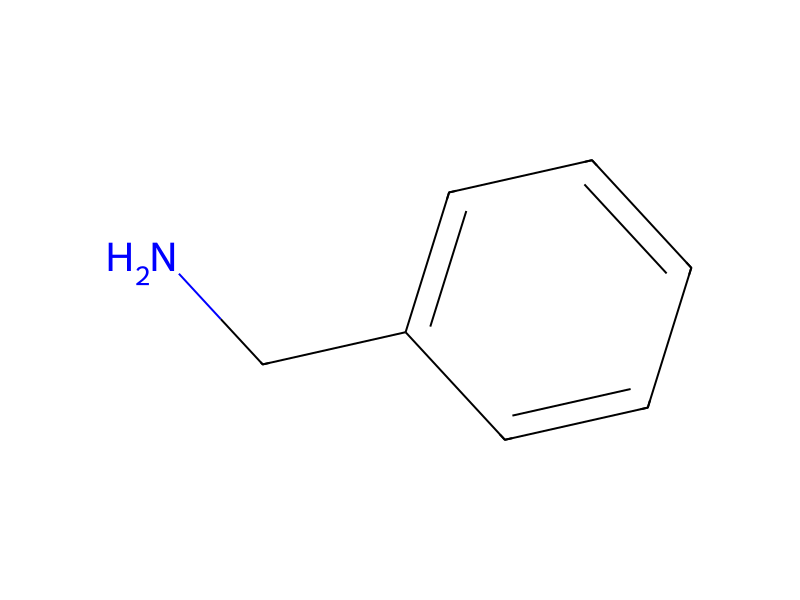
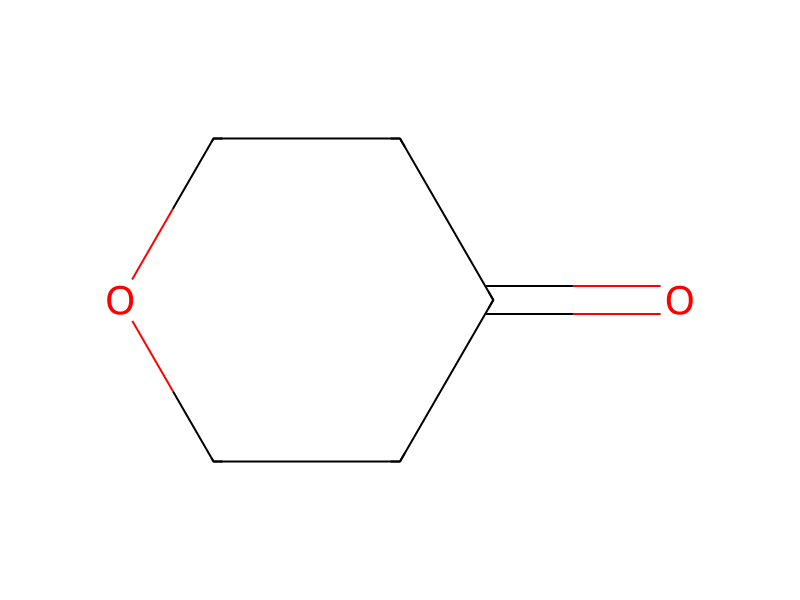




Procedure
To a solution of 3-bromo-4-methoxytoluene (11 g, 54.7 mmol) in CH2Cl2 (100 ml) under N2, was added N-bromosuccinimide (10.7 g, 60.2 mmol) and AIBN (82 mg, 0.5 mmol). The resulting mixture was refluxed overnight then cooled in an ice-water bath. The solid that precipitated was removed by filtration. The filtrate was washed with water (×2), brine (×1), dried (Na2SO4), filtered and concentrated. After drying under vacuum, the product (16.4 g, 100%) was obtained as a white solid that was used without further purification. 1H NMR (300 MHz, CDCl3) δ 7.58 (1H, d, J=2.1 Hz), 7.29 (1H, dd, J=8.1, 2.1 Hz), 6.84 (1H, d, J=8.1 Hz), 4.43 (2H, s), 3.88 (3H, s). Reaction of 3-chloro-4-methoxytoluene, N-bromosuccinimide and AIBN by essentially the same procedure described for preparation 8 gave the product. 1H NMR (300 MHz, CDCl3) δ 7.42 (1H, d, J=2.4 Hz), 7.26 (1H, dd, J=8.4, 2.4 Hz), 6.84 (1H, d, J=8.4 Hz), 4.44 (2H, s), 3.91 (2H, s). A mixture of 2,3-dihydrobenzofuran-5-carboxaldehyde (5.0 g, 33.8 mmol) and sulfuryl chloride (40 ml) was stirred at room temperature for 5 h. Excess sulfuryl chloride was removed and residue was partitioned between ethyl acetate (200 ml) and water (200 ml). The organic layer was washed with water, dried (Na2SO4), filtered and concentrated. The residue was subjected to column chromatography to give the product (3.5 g, 57%). 1H NMR (300 MHz, CDCl3) δ 9.80 (1H, s), 7.69 (1H, s), 7.65 (1H, s), 4.81 (2H, m), 3.37 (2H, m). The product of Step 1 (3.5 g, 19.3 mmol) was dissolved in THF (50 ml) and sodium borohydride (1.5 g, 40 mmol) was added. The reaction mixture was refluxed for one hour. Ethyl acetate (100 ml) was added and organic layer was washed with water (3×100 ml), dried (Na2SO4), and filtered. After evaporation of solvent, the residual product (2.9 g, 83%) was used in the next step without further purification. 1H NMR (300 MHz, CDCl3) δ 7.13 (1H, s), 7.11 (1H, s), 4.69 (2H, m), 4.58 (2H, s), 3.30 (2H, m). Step 3 The product of Step 2 (2.9 g, 16 mmol) was dissolved in CH2Cl2 (50 ml) and thionyl chloride (2 ml) was added. The reaction mixture was stirred at room temperature for one hour. Saturated NaHCO3 solution (50 ml) was added and the whole was extracted with CH2Cl2. The organic layer was dried (Na2SO4), filtered and concentrated. Subjection of the residue to column chromatography (hexane) gave the product (2.4 g, 74%). 1H NMR (300 MHz, CDCl3) δ 7.16 (1H, s), 7.13 (1H, s), 4.70 (2H, m), 4.51 (2H, s), 3.30 (2H, m). Step 1 To a stirred suspension of 2,3-dihydrobenzo[b]furan-5-carboxylic acid (3.0 g, 18 mmol) in ACOH (40 ml) was added Br2 (5 g, 31 mmol). After 16 h, the whole was evaporated to dryness and the residue was triturated with ether. The solid was collected and dried to afford the product (3.7 g, 84%). 1H NMR (300 MHz, CDCl3) δ 7.94 (1H, s), 7.72 (1H, s), 4.66 (2H, m), 3.27 (2H, m). Step 2 To a suspension of the product of step 1 (3.7 g, 15 mmol) in THF (100 ml) was added lithium aluminum hydride (0.56 g, 15 mmol), and the mixture was refluxed for 3 h. The reaction mixture was allowed to cool, then water was added. The whole was extracted with EtOAc and the organic layer was dried (Na2SO4), filtered and evaporated. The residue (2.7 g) was dissolved in CH2Cl2 (25 ml), and SOCl2 (2.4 g, 20 mmol) was added. The reaction mixture was stirred for 2 h, then diluted with CH2Cl2 (25 ml), and the whole was washed with water (3×50 ml). The organic layer was dried (Na2SO4), filtered and concentrated. The residue was subjected to flash chromatography (5:95 EtOAc/hexanes), followed by vacuum distillation (150° C., 0.5 mmHg) to give the product (1.6 g, 43%). 1H NMR (300 MHz, CDCl3) δ 7.30 (1H, s), 7.16 (1H, s), 4.68 (2H, m), 4.50 (2H, s), 3.31 (2H, m). Preparation 10 (1.2 g, 5.9 mmol) was dissolved in toluene (50 ml) and DDQ (3 g) was added. The reaction mixture was stirred at RT overnight. Additional DDQ (3 g) was added and the reaction mixture was refluxed for five hours. The solvent was removed and to the residue was added ether (100 ml). The precipitate was filtered, the filtrate was concentrated, and the residue was subjected to column chromatography (hexane) to give the product. 1H NMR (300 MHz, CDCl3) δ 7.71 (1H, m), 7.53 (1H, s), 7.37 (1H, s), 7.81 (1H, m), 4.67 (2H, s). Reaction of preparation 11 with DDQ by essentially the procedure described for preparation 12 afforded the product. 1H NMR (300 MHz, CDCl3) δ 7.72 (1H, m), 7.58 (1H, s), 7.53 (1H, s), 6.84 (1H, m), 4.67 (2H, s). To a stirred mixture of tetrahydro-4H-pyran-4-one (22.5 g, 225 mmol) and benzylamine (32.7 ml, 300 mmol) in 1,2-dichloroethane (400 ml), was added Na(Oac)3BH (107 g, 500 mmol). The reaction mixture was stirred for 2 days, diluted with CH2Cl2 and washed with 1 N NaOH. The organic layer was dried (NaHCO3), filtered and evaporated. Chromatography of the residue over silica (gradient 1:99 MeOH/CH2Cl2, then 2:98 MeOH/CH2Cl2, then 5:95 MeOH/CH2Cl2) gave 4-benzylaminotetrahydro-2H-pyran. This product was dissolved in MeOH (350 ml), and to the solution was added ammonium formate (46 g, 730 mmol) and 10% Pd(OH)2-on-carbon (23 g). The reaction mixture was refluxed for 3 hours, then filtered and concentrated to give the product (19 g) that was used without further purification. 1H NMR (300 MHz, CDCl3) δ 3.96 (2H, m), 3.38 (2H, m), 2.88 (1H, m), 2.00 (2H, b), 1.78 (2H, m), 1.44 (2H, m).
Workup
- temperaturethe reaction mixture was refluxed for five hours
- customThe solvent was removed and to the residue
- additionwas added ether (100 ml)
- filtrationThe precipitate was filtered
- concentrationthe filtrate was concentrated
- customto give the product
- customdescribed for preparation 12
- customafforded the product
- stirringThe reaction mixture was stirred for 2 days
- washwashed with 1 N NaOH
- dry with materialThe organic layer was dried (NaHCO3)
- filtrationfiltered
- customevaporated
Sources & evidence
- ORD record
- ord-fbcf35bd55b949fd9b945193bb473d71
- Source dataset
- uspto-grants-2005_11
- Patent number
- US06969719B2
Reaction notes
Loading…