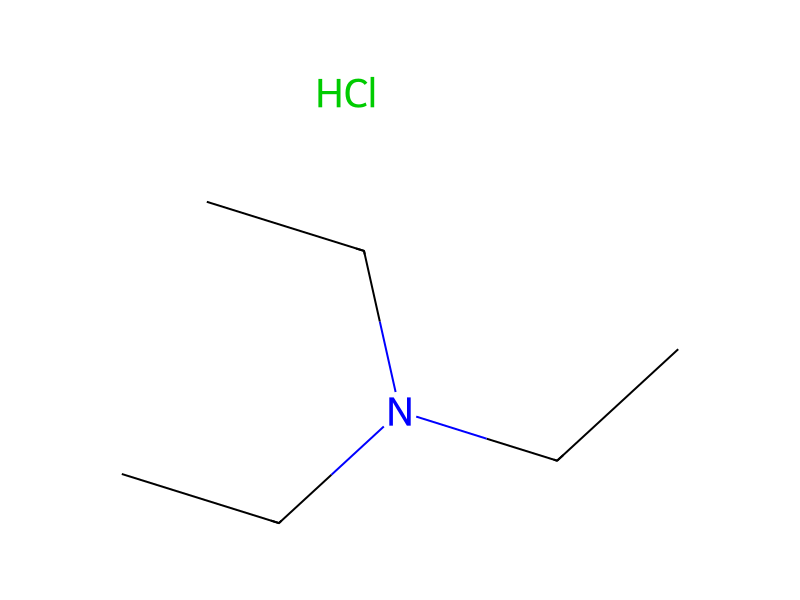
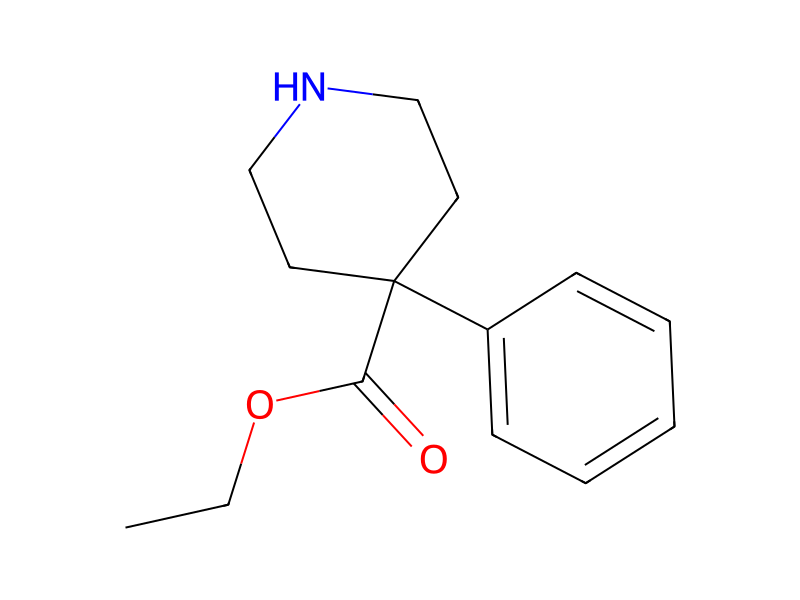
Triethylamine → N-(2-Pyrimidinyl)-4-phenyl-4-carboethoxy piperidine
Reaction equation

[C:1]1([C:7]2([C:13]([O:15][CH2:16][CH3:17])=[O:14])[CH2:12][CH2:11][NH:10][CH2:9][CH2:8]2)[CH:6]=[CH:5][CH:4]=[CH:3][CH:2]=1.C(N(CC)CC)C.Cl[C:26]1[N:31]=[CH:30][CH:29]=[CH:28][N:27]=1.Cl.C(N(CC)CC)C>C1(C)C=CC=CC=1>[N:27]1[CH:28]=[CH:29][CH:30]=[N:31][C:26]=1[N:10]1[CH2:9][CH2:8][C:7]([C:1]2[CH:2]=[CH:3][CH:4]=[CH:5][CH:6]=2)([C:13]([O:15][CH2:16][CH3:17])=[O:14])[CH2:12][CH2:11]1Participants
6




Procedure
To a mixture of 4.0 gms (0.017 mole) 4-phenyl-4-carboethoxy-piperidine and 1.72 gms (0.017 mole) of triethylamine in 50 ml. toluene was added dropwise 2.0 gms (0.017 mole) 2-chloropyrimidine. Triethylamine hydrochloride started to precipitate out almost immediately. The reaction mixture was warmed to 70°-80° for a period of two hours, and then allowed to cool. The triethylamine hydrochloride was filtered off and the filtrate washed with water (to remove the last traces of triethylamine hydrochloride). The residue was recrystallized from acetone to yield 2.5 gms (47% yield), m.p. 119°-120°.
Workup
- customto precipitate out almost immediately
- temperatureThe reaction mixture was warmed to 70°-80° for a period of two hours
- temperatureto cool
- filtrationThe triethylamine hydrochloride was filtered off
- washthe filtrate washed with water (
- customto remove the last traces of triethylamine hydrochloride)
- customThe residue was recrystallized from acetone
- customto yield 2.5 gms (47% yield), m.p. 119°-120°
Sources & evidence
- ORD record
- ord-4e00a0d417b749e489d8d02994935bfc
- Source dataset
- uspto-grants-1982_05
- Patent number
- US04329345
Reaction notes
Loading…