Isobutanol → Terazosin
Reaction equation

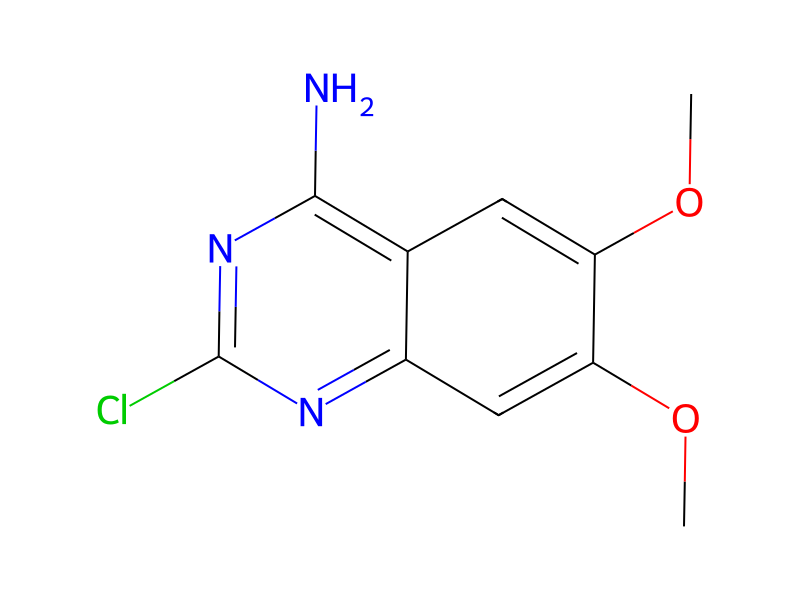
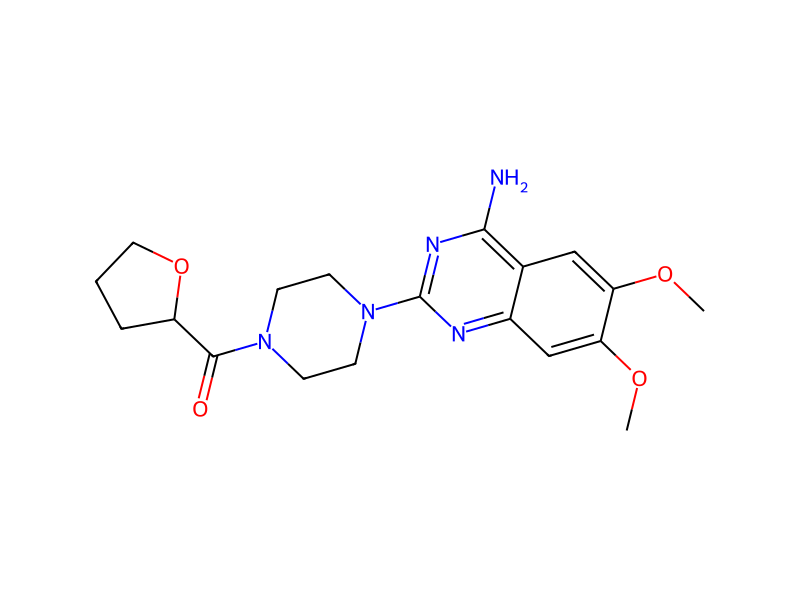
C(O)C(C)C.[O:6]1[CH2:10][CH2:9][CH2:8][CH:7]1[C:11]([N:13]1[CH2:18][CH2:17][NH:16][CH2:15][CH2:14]1)=[O:12].[NH2:19][C:20]1[C:29]2[C:24](=[CH:25][C:26]([O:32][CH3:33])=[C:27]([O:30][CH3:31])[CH:28]=2)[N:23]=[C:22](Cl)[N:21]=1>O>[CH3:31][O:30][C:27]1[CH:28]=[C:29]2[C:20]([NH2:19])=[N:21][C:22]([N:16]3[CH2:15][CH2:14][N:13]([C:11]([CH:7]4[O:6][CH2:10][CH2:9][CH2:8]4)=[O:12])[CH2:18][CH2:17]3)=[N:23][C:24]2=[CH:25][C:26]=1[O:32][CH3:33]Participants
5
Reactant 3


Product 1
Reagents, catalysts & solvents 1

Procedure
To a solution of iso-butanol (306 ml), water (34 ml) and N-(2-tetrahydrofuroyl)piperazine (20 g) were added, while stirring, 4-amino-2-chloro-6,7-dimethoxyquinazoline (22.2 g). The reaction mixture was heated to reflux and the reflux was maintained for about 13 hours. Then the reaction mixture was cooled to room temperature and stirred at this temperature for about 12 hours. The crystals were collected by filtration, washed with iso-butanol and dried in vacuo at 40° C. to yield 39.2 g (91.9%) of Terazosin.HCl dihydrate. See Trial A in Table I.
Workup
- temperatureThe reaction mixture was heated
- temperatureto reflux
- temperaturethe reflux was maintained for about 13 hours
- stirringstirred at this temperature for about 12 hours
- filtrationThe crystals were collected by filtration
- washwashed with iso-butanol
- customdried in vacuo at 40° C.
Sources & evidence
- ORD record
- ord-7137cfd568dc41b6bd12c698618ef1c2
- Source dataset
- uspto-grants-2001_06
- Patent number
- US06248888B1
Reaction notes
Loading…