Water → HCID 86743097, compound
Reaction equation

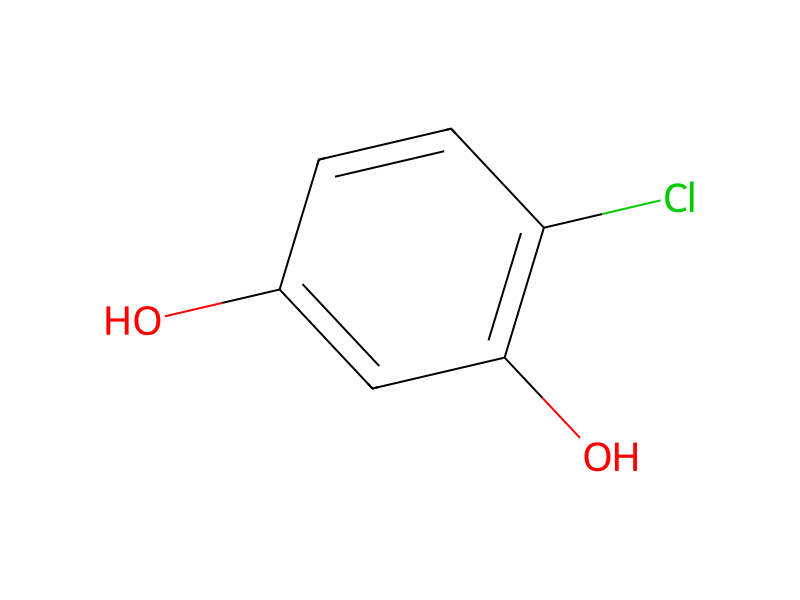
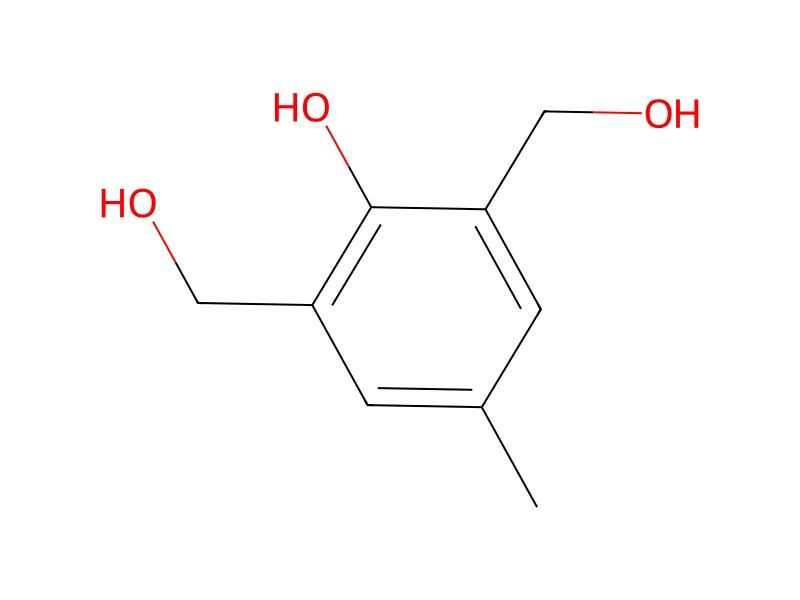
[OH:1][CH2:2][C:3]1[C:8]([OH:9])=[C:7]([CH2:10][OH:11])[CH:6]=[C:5]([CH3:12])[CH:4]=1.[Cl:13][C:14]1[CH:20]=[CH:19][C:17]([OH:18])=[CH:16][C:15]=1[OH:21].O.C1(C)C=CC(S(O)(=O)=O)=CC=1.O>C(OCCO)C>[OH:11][CH2:10][C:7]1[C:8]([OH:9])=[C:3]([CH2:2][OH:1])[CH:4]=[C:5]([CH3:12])[CH:6]=1.[Cl:13][C:14]1[CH:20]=[CH:19][C:17]([OH:18])=[CH:16][C:15]=1[OH:21]Participants
6
Reactant 4


Product 1

Reagents, catalysts & solvents 1

Procedure
2,6-Bis(hydroxymethyl)-p-cresol (25 g, 0.149 moles), 4-chlororesorcinol (18.26 g, 0.126 moles and p-toluenesulfonic acid monohydrate (0.67 g, 0.0035 moles) were heated for 5.5 hours at 65°-70° C. in 37 mL 2-ethoxyethanol. The reaction mixture was diluted with 125 mL 2-ethoxyethanol and added dropwise to 1.5 L rapidly stirring H2O. The solid was collected by filtration, reslurried in 1 L H2O and refiltered. This process was repeated twice and the solid vacuum dried to yield 38.49 g. See Tables 1 and 2 for glass transition and alkaline dissolution data. The ortho-, ortho-linkages of the alternating copolymers and the terminal groups were identified by 13C NMR analysis.
Workup
- filtrationThe solid was collected by filtration
- customthe solid vacuum dried
- customto yield 38.49 g
- dissolutionfor glass transition and alkaline dissolution data
Sources & evidence
- ORD record
- ord-2b238d2395e04905b1adc4d1607f308b
- Source dataset
- uspto-grants-1990_11
- Patent number
- US04970287
Reaction notes
Loading…