2-Iodoquinoline → 4-[1,1-Dimethyl-3-(2-quinolyl)-2-propynyloxy]benzonitrile
Reaction equation

I[C:2]1[CH:11]=[CH:10][C:9]2[C:4](=[CH:5][CH:6]=[CH:7][CH:8]=2)[N:3]=1.[CH3:12][C:13]([CH3:25])([O:16][C:17]1[CH:24]=[CH:23][C:20]([C:21]#[N:22])=[CH:19][CH:18]=1)[C:14]#[CH:15]>C(NCC)C.[Pd](Cl)Cl.[Cu]I.C1(P(C2C=CC=CC=2)C2C=CC=CC=2)C=CC=CC=1>[CH3:12][C:13]([CH3:25])([O:16][C:17]1[CH:18]=[CH:19][C:20]([C:21]#[N:22])=[CH:23][CH:24]=1)[C:14]#[C:15][C:2]1[CH:11]=[CH:10][C:9]2[C:4](=[CH:5][CH:6]=[CH:7][CH:8]=2)[N:3]=1Participants
7
Reactant 2


Product 1

Reagents, catalysts & solvents 4

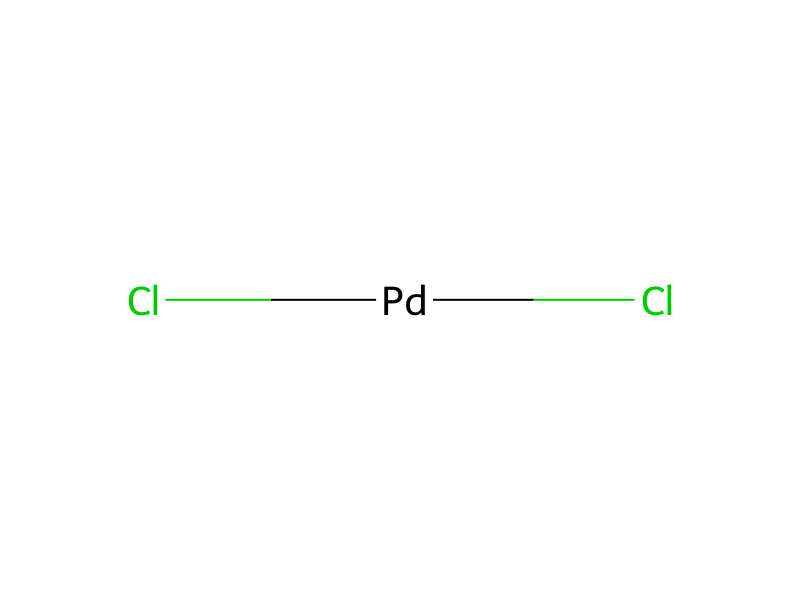


Procedure
5.1 g of 2-iodoquinoline were added at room temperature to a solution of 18 mg of palladium(II) chloride, 52 mg of triphenylphosphine and 38 mg of copper(I) iodide in 100 ml of diethylamine. 3,7 g of 4-(1,1-dimethyl-2-propynyloxy)benzonitrile were added. After stirring at room temperature for 18 hours the mixture was evaporated and the residue was dissolved in ethyl acetate and water. The organic phase was dried over sodium sulphate and evaporated. The residue was chromatographed on silica gel using ethyl acetate/petroleum ether (1:2) for the elution to give 5.8 g of 4-[1,1-dimethyl-3-(2-quinolyl)-2-propynyloxy]benzonitrile as a yellow gum.
Workup
- customwas evaporated
- dissolutionthe residue was dissolved in ethyl acetate
- dry with materialThe organic phase was dried over sodium sulphate
- customevaporated
- customThe residue was chromatographed on silica gel
- washfor the elution
Sources & evidence
- ORD record
- ord-e3e8f97b127644c8963cda6fc5ce7b7b
- Source dataset
- uspto-grants-1990_11
- Patent number
- US04971982
Reaction notes
Loading…