4-Hydroxybenzoic Acid → Benzyl 4-Hydroxybenzoate
Reaction equation

[OH:1][C:2]1[CH:10]=[CH:9][C:5]([C:6]([OH:8])=[O:7])=[CH:4][CH:3]=1.[CH2:11](O)[C:12]1[CH:17]=[CH:16][CH:15]=[CH:14][CH:13]=1.C1(C)C(C)=CC=CC=1>CC([O-])C.CC([O-])C.CC([O-])C.CC([O-])C.[Ti+4].O>[OH:1][C:2]1[CH:10]=[CH:9][C:5]([C:6]([O:8][CH2:11][C:12]2[CH:17]=[CH:16][CH:15]=[CH:14][CH:13]=2)=[O:7])=[CH:4][CH:3]=1Participants
6
Reactant 3
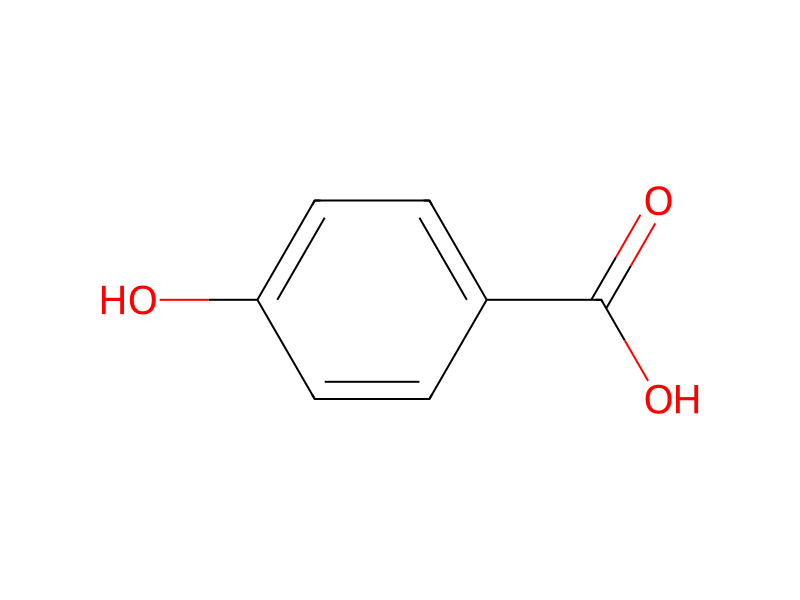


Product 1

Reagents, catalysts & solvents 2


Conditions
- Temperature
- 85 °C
Procedure
69.1 g (0.5 mole) of p-hydroxybenzoic acid, 216.2 g (2 moles) of benzyl alcohol, 0.7 g of tetraisopropyl titanate and 30 g of xylene were fed into a fournecked glass flask, and refluxed for 3 hours with stirring in an atmosphere of nitrogen. During this time, the temperature of the reaction mixture was maintained at 85° C. Water formed by the reaction was removed out of the reaction system by the Dien-Stark's device. The presence of xylene simplified temperature control and promoted removal of water. Benzyl p-hydroxybenzoate was obtained in a yield of 98.7%.
Workup
- temperaturerefluxed for 3 hours
- customwas removed out of the reaction system by the Dien-Stark's device
- customremoval of water
Sources & evidence
- ORD record
- ord-dd4b437680e349539beb330f8fd55808
- Source dataset
- uspto-grants-1990_11
- Patent number
- US04973737
Reaction notes
Loading…