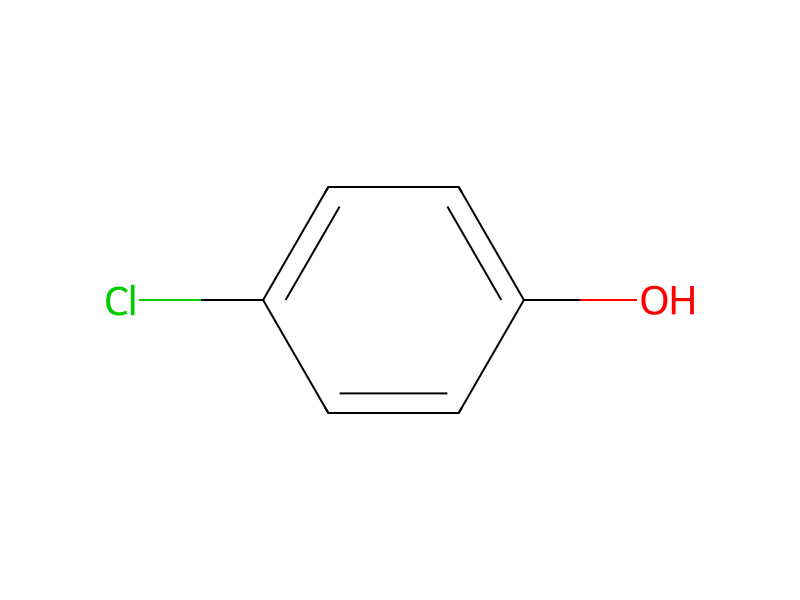
4-Chlorophenol → HCID 54094554, compound
Reaction equation

[Cl:1][C:2]1[CH:7]=[CH:6][C:5]([OH:8])=[CH:4][CH:3]=1.[H-].[Na+].Br[CH:12]([C:14]1[C:15]2[N:16]([C:20]([CH3:23])=[N:21][N:22]=2)[N:17]=[CH:18][CH:19]=1)[CH3:13]>CN(C)C=O>[Cl:1][C:2]1[CH:7]=[CH:6][C:5]([O:8][CH:12]([C:14]2[C:15]3[N:16]([C:20]([CH3:23])=[N:21][N:22]=3)[N:17]=[CH:18][CH:19]=2)[CH3:13])=[CH:4][CH:3]=1Participants
Reactant 3


Product 1

Reagents, catalysts & solvents 1

Procedure
p-Chlorophenol (0.25 g) was added to a suspension of sodium hydride (0.08 g) in anhydrous dimethylformamide (5 ml). The resultant mixture was stirred at room temperature for 30 minutes then 8-(1-bromoethyl)-3-methyl-1,2,4-triazolo[4,3-b]pyridazine (0.38 g), in dimethylformamide (20 ml), was added dropwise and the mixture stirred for 1 hour. The reaction mixture was concentrated to dryness and the residue dissolved in dichloromethane (50 ml). The solution was washed with 5% aqueous sodium hydroxide and then with water. The organic layer was separated and dried with sodium sulphate, filtered and concentrated to dryness. The white solid obtained was recrystallized from ethyl acetate:hexane to give 8-[1-(4-chlorophenoxy)ethyl]-3-methyl-1,2,4-triazolo[4,3-b]pyridazine. m.p. 158-160° C.
Workup
- concentrationThe reaction mixture was concentrated to dryness
- dissolutionthe residue dissolved in dichloromethane (50 ml)
- washThe solution was washed with 5% aqueous sodium hydroxide
- customThe organic layer was separated
- dry with materialdried with sodium sulphate
- filtrationfiltered
- concentrationconcentrated to dryness
- customThe white solid obtained
- customwas recrystallized from ethyl acetate
Sources & evidence
- ORD record
- ord-496389e7d15e48238ba568eba6ba0763
- Source dataset
- uspto-grants-1999_05
- Patent number
- US05905079
Reaction notes
Loading…