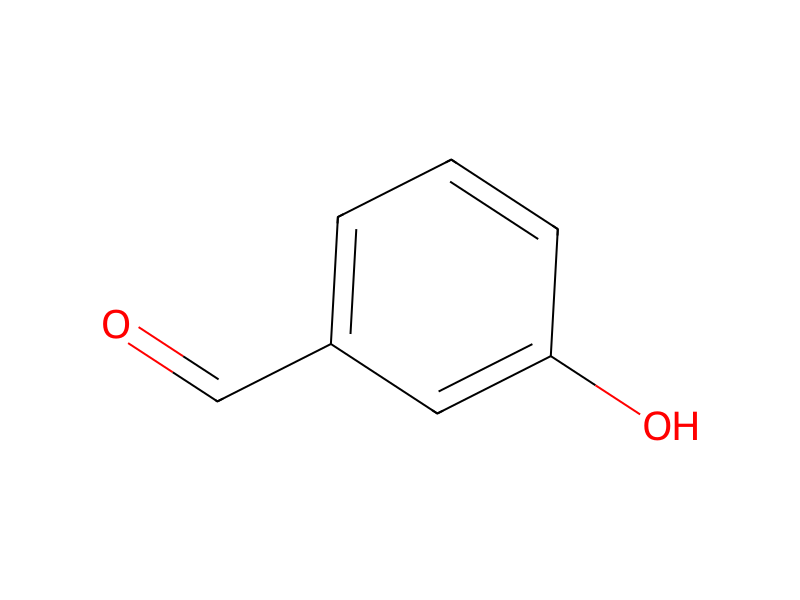
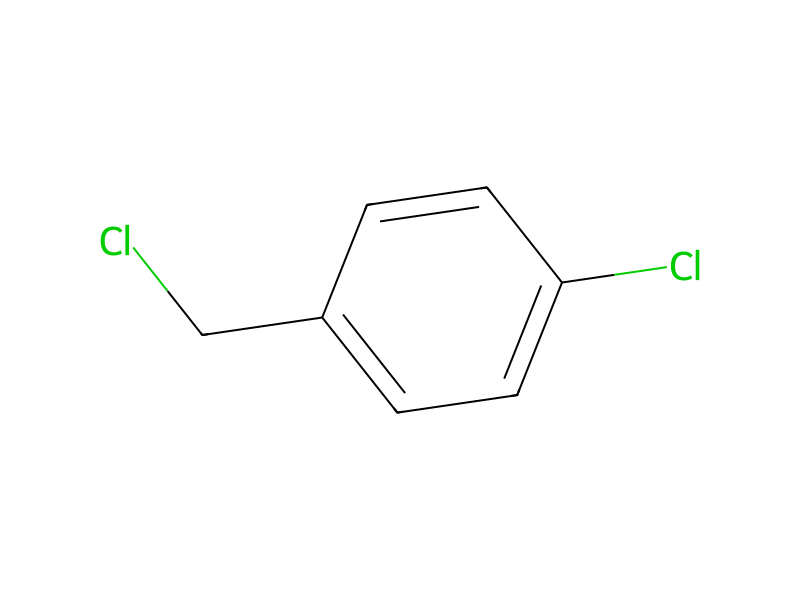
3-Hydroxybenzaldehyde → 3-[(4-chlorobenzyl)oxy]benzaldehyde
Reaction equation

[OH:1][C:2]1[CH:3]=[C:4]([CH:7]=[CH:8][CH:9]=1)[CH:5]=[O:6].[Cl:10][C:11]1[CH:18]=[CH:17][C:14]([CH2:15]Cl)=[CH:13][CH:12]=1.C(=O)([O-])[O-].[K+].[K+].C(OCC)(=O)C.O>CN(C)C=O>[Cl:10][C:11]1[CH:18]=[CH:17][C:14]([CH2:15][O:1][C:2]2[CH:3]=[C:4]([CH:7]=[CH:8][CH:9]=2)[CH:5]=[O:6])=[CH:13][CH:12]=1Participants
6




Conditions
- Temperature
- 60 °C
Procedure
To a solution of 1.2 g of 3-hydroxybenzaldehyde in 50 ml of N,N-dimethylformamide were added 2.4 g of 4-chlorobenzyl chloride and 2.1 g of potassium carbonate. The mixture was stirred at 60° C. for 3 hours. After cooling, the reaction mixture was treated with ethyl acetate-water. The resulting ethyl acetate layer was separated, washed with water, dried with anhydrous magnesium sulfate, and subjected to vacuum distillation to remove the solvent. The resulting residue was purified by silica gel column chromatography (eluant: n-hexane/ethyl acetate=102) to obtain 1.9 g of 3-(4-chlorobenzyloxy)benzaldehyde.
Workup
- temperatureAfter cooling
- customThe resulting ethyl acetate layer was separated
- washwashed with water
- dry with materialdried with anhydrous magnesium sulfate
- distillationsubjected to vacuum distillation
- customto remove the solvent
- customThe resulting residue was purified by silica gel column chromatography (eluant: n-hexane/ethyl acetate=102)
Sources & evidence
- ORD record
- ord-0edd15d40248420f9ffe5a052e7a73c1
- Source dataset
- uspto-grants-1996_08
- Patent number
- US05550292
Reaction notes
Loading…