Hydrochloric Acid → HCID 12218047, compound
Reaction equation

[OH-].[Li+].[C:3]1(CC(=O)C(O)=O)C=CC=CC=1.Cl.[O:16]=[C:17]([CH:21]([C:23]1[CH:28]=[CH:27][CH:26]=[CH:25][CH:24]=1)[CH3:22])[C:18]([OH:20])=[O:19]>O1CCCC1>[O:16]=[C:17]([C:21]([CH3:3])([C:23]1[CH:28]=[CH:27][CH:26]=[CH:25][CH:24]=1)[CH3:22])[C:18]([OH:20])=[O:19]Participants
6
Reactant 4

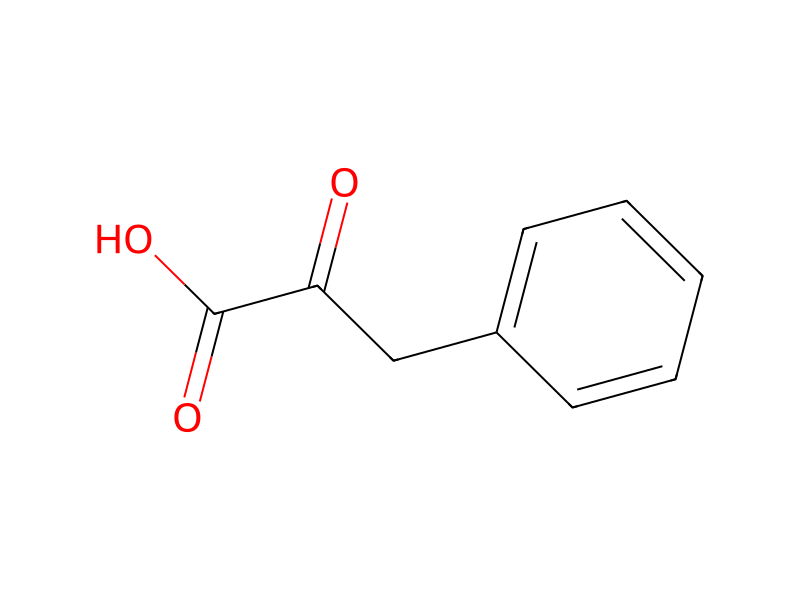


Product 1

Reagents, catalysts & solvents 1

Procedure
A 2.25N aqueous solution of lithium hydroxide (4.0 ml, 9.0 mmoles) and 6 ml of tetrahydrofuran were added to 0.492 g (3.0 mmoles) of phenylpyruvic acid. The mixture was gradually heated with ice cooling to react it for 12 hours. After the reaction, 20 ml of 1N hydrochloric acid was added, and the mixture was extracted with ether. The organic layer was dried over magnesium sulfate. The drying reagent was separated by filtration, and the solvent was evaporated under reduced pressure to give a pale white solid. The NMR spectral analysis of this product led to the determination that 2-oxo-3-phenylbutanoic acid formed in a yield of 85 %, and 2-oxo-3-methyl-3-phenylbutanoic acid, in a yield of 4 %.
Workup
- temperatureThe mixture was gradually heated with ice cooling
- customto react it for 12 hours
- additionwas added
- extractionthe mixture was extracted with ether
- dry with materialThe organic layer was dried over magnesium sulfate
- customThe drying reagent was separated by filtration
- customthe solvent was evaporated under reduced pressure
- customto give a pale white solid
Sources & evidence
- ORD record
- ord-8f657caa819749ceb89dfb548920d239
- Source dataset
- uspto-grants-1991_07
- Patent number
- US05028738
Reaction notes
Loading…