Potassium Carbonate → 1-(2-Carboxy-3-methoxyphenyl)-3-indazolecarboxylic acid
Reaction equation

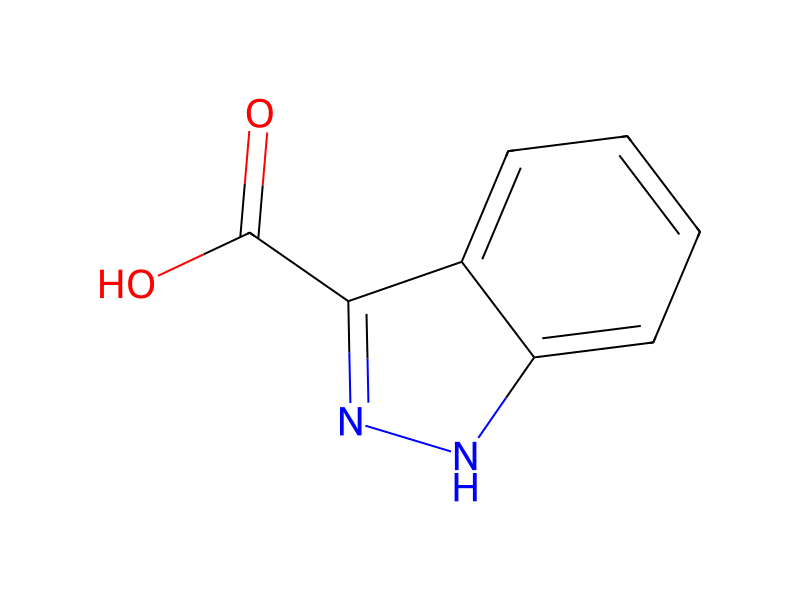
[NH:1]1[C:9]2[C:4](=[CH:5][CH:6]=[CH:7][CH:8]=2)[C:3]([C:10]([OH:12])=[O:11])=[N:2]1.Br[C:14]1[CH:22]=[CH:21][CH:20]=[C:19]([O:23][CH3:24])[C:15]=1[C:16]([OH:18])=[O:17].C(=O)([O-])[O-].[K+].[K+]>[Cu]=O>[C:16]([C:15]1[C:19]([O:23][CH3:24])=[CH:20][CH:21]=[CH:22][C:14]=1[N:1]1[C:9]2[C:4](=[CH:5][CH:6]=[CH:7][CH:8]=2)[C:3]([C:10]([OH:12])=[O:11])=[N:2]1)([OH:18])=[O:17]Participants
5



Procedure
3-Indazolecarboxylic acid (1.16 g), 0.81 g of 2-bromo-6-methoxybenzoic acid [described in Chem. Ber., 107, 3874 (1974)], 0.79 g of potassium carbonate and 0.04 g of copper(II) oxide were subjected to reaction in the same manner as in Example 1 to obtain 0.40 g (25.6%) of 1-(2-carboxy-3-methoxyphenyl)-3-indazolecarboxylic acid.
Sources & evidence
- ORD record
- ord-fd6a0261d8474e92b2c6ba98351d0ba9
- Source dataset
- uspto-grants-1992_01
- Patent number
- US05079358
Reaction notes
Loading…