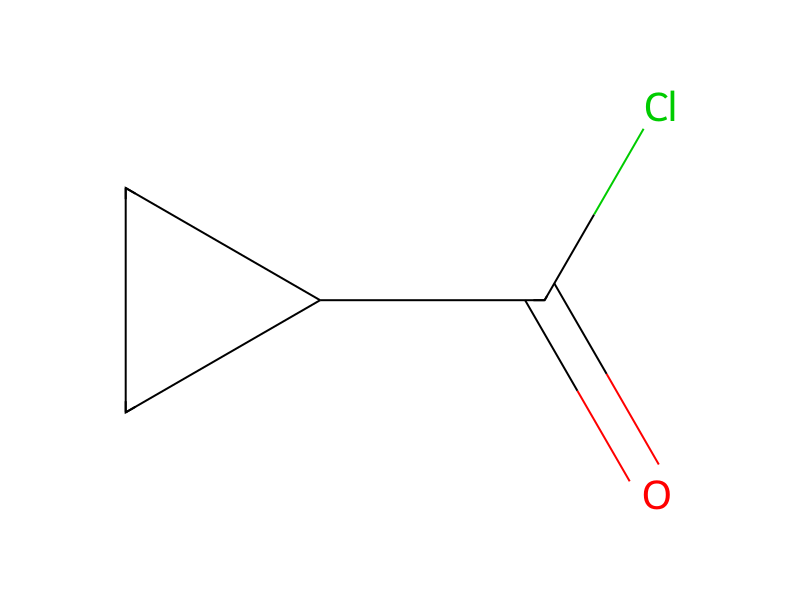
Cyclopropanecarbonyl chloride → HCID 19914483, compound
Reaction equation

[C:1]([C:4]1[CH:10]=[C:9]([O:11][CH2:12][CH3:13])[C:8]([O:14][CH3:15])=[CH:7][C:5]=1[NH2:6])(=[O:3])[CH3:2].[CH:16]1([C:19](Cl)=[O:20])[CH2:18][CH2:17]1.C1(C2NC3C(C(=O)C=2)=CC(OC)=C(OC)C=3)CC1>C(N(CC)CC)C>[CH:16]1([C:19]([NH:6][C:5]2[CH:7]=[C:8]([O:14][CH3:15])[C:9]([O:11][CH2:12][CH3:13])=[CH:10][C:4]=2[C:1](=[O:3])[CH3:2])=[O:20])[CH2:18][CH2:17]1Participants
5
Reactant 3


Product 1

Reagents, catalysts & solvents 1

Procedure
2-Acetyl-4-ethoxy-5-methoxyaniline (490 mg), triethylamine (1.0 ml) and cyclopropylcarbonyl chloride (0.25 ml) were reacted in the same manner as in the preparation of compound 95 to give N-cyclopropylcarbonyl-2-acetyl-4-ethoxy-5-methoxyaniline (420 mg). This compound (380 mg) and potassium t-butoxide (770 mg) were reacted in the same manner as in the preparation of compound 95 to obtain 2-cyclopropyl-6-ethoxy-7-methoxy-4(1H)-quinolone (compound 119, 80 mg).
Sources & evidence
- ORD record
- ord-ae16fc3f17a94ddcbfe4f92b8bd1aba3
- Source dataset
- uspto-grants-1992_01
- Patent number
- US05081121
Reaction notes
Loading…