Triethylamine → HCID 59396016, compound
Reaction equation

[NH2:1][C@@H:2]([CH2:5][CH:6]=[CH2:7])[CH2:3][OH:4].C(N(CC)CC)C.[CH3:15][C:16]([O:19][C:20]([NH:22][CH2:23][C:24](ON1C(=O)CCC1=O)=[O:25])=[O:21])([CH3:18])[CH3:17].[Mn]([O-])(=O)(=O)=O.[K+].[NH4+].[Cl-]>C1COCC1.CCOC(C)=O.C(Cl)Cl.CO.CO>[OH:4][CH2:3][C@@H:2]([NH:1][C:24](=[O:25])[CH2:23][NH:22][C:20](=[O:21])[O:19][C:16]([CH3:15])([CH3:17])[CH3:18])[CH2:5][CH:6]=[CH2:7]Participants
Reactant 5



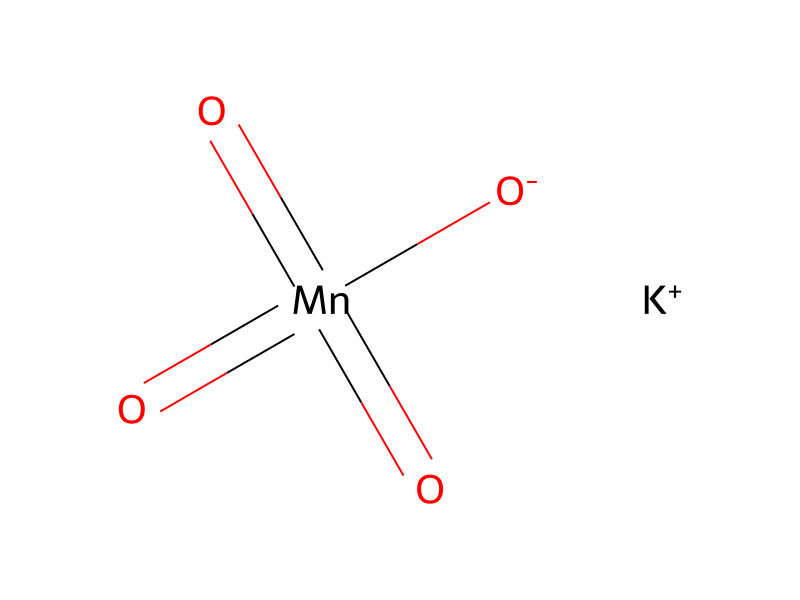

Product 1

Reagents, catalysts & solvents 4




Conditions
- Temperature
- 2 °C
Procedure
In a 5 L reactor, to a solution of (2S)-2-amino-4-penten-1-ol D20 (110 g of the crude title compound prepared in the description D20) in THF (660 ml) and MeOH (440 ml) stirred at 0° C. (+5° C. internal) was added triethylamine (182 ml, 1305 mmol) and 2,5-dioxo-1-pyrrolidinyl N-{[(1,1-dimethylethyl)oxy]carbonyl}glycinate (available from Sigma-Aldrich #15423) (237 g, 870 mmol) portionwise over 15 min. The reaction mixture was stirred at 2° C. (internal temperature) for 3 hours. TLC check (TLC-NH2, DCM/MeOH 95/5, potassium permanganate) showed residual starting material. Further 2,5-dioxo-1-pyrrolidinyl N-{[(1,1-dimethylethyl)oxy]carbonyl}glycinate (60 g, 220 mmol) was added and the mixture stirred at 2° C. for 1 hour. TLC check (TLC-NH2, DCM/MeOH 95/5, potassium permanganate) showed residual starting material. Further 2,5-dioxo-1-pyrrolidinyl N-{[(1,1-dimethylethyl)oxy]carbonyl}glycinate (40 g, 146 mmol) was added and the mixture stirred at 2° C. for 1 hours. TLC check (TLC-NH2, DCM/MeOH 95/5, potassium permanganate) showed residual starting material but the work-up was carried out. The reaction mixture was poured into aqueous saturated solution of NH4Cl (3400 ml) and AcOEt (1375 ml), then the phases were separated and the aqueous layer was back-extracted with AcOEt (1375 ml). The combined organic layers were washed with NaHCO3 aqueous saturated solution (1031 ml) dried (Na2SO4) and evaporated to give crude material (268 g, deep brown). This residue was triturated with Et2O (687 ml) for 1 hour at 25° C. The solid was filtered (gooch n3), washed with Et2O (200 ml) and dried under vacuum to give the title compound D21 (87 g) as pale brown solid. Mother liquors (deep brown) were evaporated and the residue chromatographed (Biotage 75 L, silica column, eluting with DCM/MeOH 98/2, 95/5) to give (34 g) of residual brown product that was triturated with Et2O (200 ml). The solid was filtered, washed with Et2O and dried under vacuum to give a further batch of the title compound D21 (26 g) as pale brown solid. MS: (ES/+) m/z: 259 (M+1). C12H22N2O4 requires 258. 1H NMR (400 MHz, CDCl3) δ ppm 1.47 (s, 9 H) 2.22-2.43 (m, 2 H) 2.68-2.83 (m, 1 H) 3.50-3.86 (m, 4 H) 3.94-4.09 (m, 1 H) 5.00-5.25 (m, 3 H) 5.64-5.89 (m, 1 H) 6.17-6.44 (m, 1 H)
Workup
- stirringthe mixture stirred at 2° C. for 1 hour
- stirringthe mixture stirred at 2° C. for 1 hours
- customthe phases were separated
- extractionthe aqueous layer was back-extracted with AcOEt (1375 ml)
- washThe combined organic layers were washed with NaHCO3 aqueous saturated solution (1031 ml)
- dry with materialdried (Na2SO4)
- customevaporated
- customto give crude material (268 g, deep brown)
- customThis residue was triturated with Et2O (687 ml) for 1 hour at 25° C
- filtrationThe solid was filtered (gooch n3)
- washwashed with Et2O (200 ml)
- customdried under vacuum
Sources & evidence
- ORD record
- ord-81d6da29f4cc4dd6870a2b00aca7f41b
- Source dataset
- uspto-grants-2012_03
- Patent number
- US08133908B2
Reaction notes
Loading…