Potassium Carbonate → 5-Bromo-2-(2,6-dimethyl-pyridin-4-yloxy)-benzaldehyde
Reaction equation

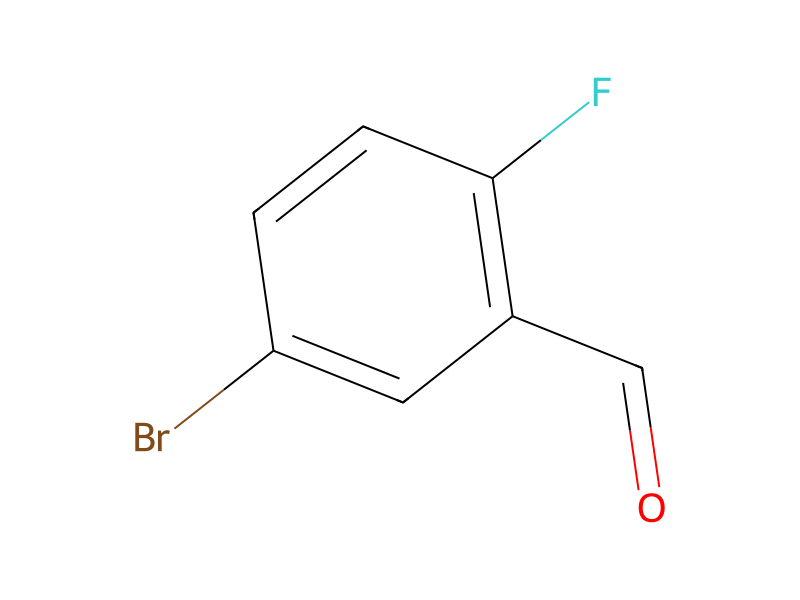
[Br:1][C:2]1[CH:3]=[CH:4][C:5](F)=[C:6]([CH:9]=1)[CH:7]=[O:8].[CH3:11][C:12]1[CH:17]=[C:16]([OH:18])[CH:15]=[C:14]([CH3:19])[N:13]=1.C([O-])([O-])=O.[K+].[K+]>CN(C)C(=O)C>[Br:1][C:2]1[CH:3]=[CH:4][C:5]([O:18][C:16]2[CH:15]=[C:14]([CH3:19])[N:13]=[C:12]([CH3:11])[CH:17]=2)=[C:6]([CH:9]=1)[CH:7]=[O:8]Participants
5



Procedure
In a manner similar to the method described in Example 50a, 5-bromo-2-fluorobenzaldehyde (4.1 g, 20 mmol) (Alfa) was reacted with 2,6-dimethyl-4-hydroxypyridine (2.5 g, 20 mmol) and K2CO3 in N,N-dimethylacetamide to give 5-bromo-2-(2,6-dimethyl-pyridin-4-yloxy)-benzaldehyde as an off white solid (Yield 6 g, 98%).
Sources & evidence
- ORD record
- ord-006585e246ea46e5b9ff17fa0656cf8b
- Source dataset
- uspto-grants-2012_03
- Patent number
- US08134001B2
Reaction notes
Loading…