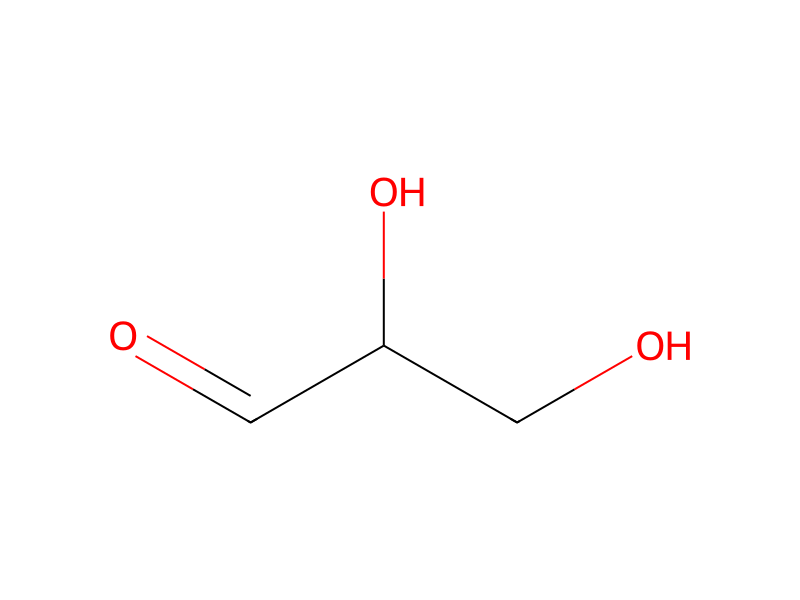
Acetone → Glyceraldehyde
Reaction equation

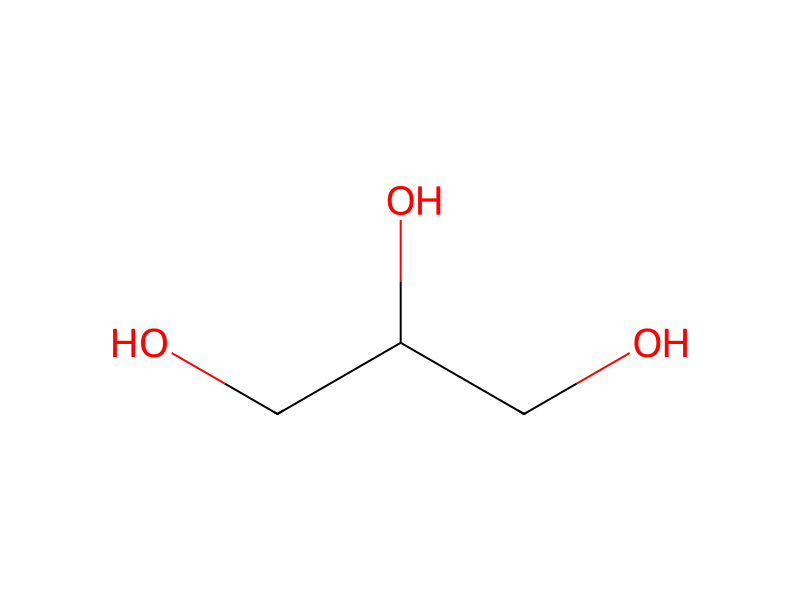
CC([OH:4])C.CC(C)=[O:7].[OH:9][CH2:10][CH:11]([CH2:13][OH:14])[OH:12]>>[O:9]=[CH:10][CH:11]([CH2:13][OH:14])[OH:12].[OH:4][CH:13]([OH:14])[C:11](=[O:12])[CH3:10].[C:10]([OH:7])(=[O:9])[CH:11]([CH2:13][OH:14])[OH:12]Participants




Procedure
The above-described catalyst may be used for liquid phase oxidation reactions. Examples of such reactions include the oxidation of alcohols and polyols to form aldehydes, ketones, and acids (e.g., the oxidation of 2-propanol to form acetone, and the oxidation of glycerol to form glyceraldehyde, dihydroxyacetone, or glyceric acid); the oxidation of aldehydes to form acids (e.g., the oxidation of formaldehyde to form formic acid, and the oxidation of furfural to form 2-furan carboxylic acid); the oxidation of tertiary amines to form secondary amines (e.g., the oxidation of nitrilotriacetic acid (“NTA”) to form iminodiacetic acid (“IDA”)); the oxidation of secondary amines to form primary amines (e.g., the oxidation of IDA to form glycine); and the oxidation of various acids (e.g., formic acid or acetic acid) to form carbon dioxide and water.
Sources & evidence
- ORD record
- ord-1cec7ec610a24441964d5fc7c797d8c5
- Source dataset
- uspto-grants-2012_03
- Patent number
- US08143441B2
Reaction notes
Loading…