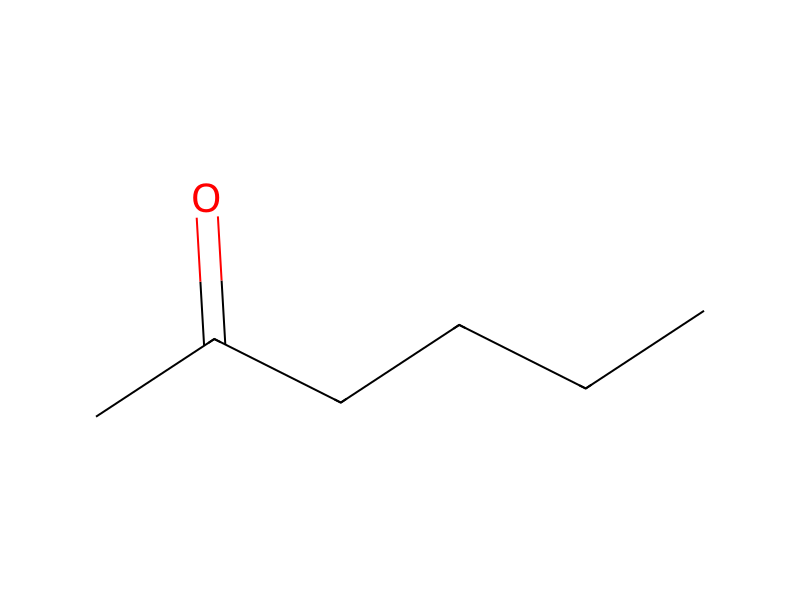
tert-Butyl hydroperoxide → 2-Hexanone
Reaction equation

[C:1]([O:5]O)(C)([CH3:3])[CH3:2].[CH2:7]=[CH:8][CH2:9][CH2:10][CH2:11][CH3:12]>C([O-])(=O)C.[Pd+2].C([O-])(=O)C.ClC(Cl)C>[CH3:2][C:1](=[O:5])[CH2:3][CH2:7][CH2:8][CH3:9].[CH2:7]=[CH:8][CH2:9][CH2:10][CH2:11][CH3:12]Participants
6
Reactant 2


Product 2
Reagents, catalysts & solvents 2


Procedure
30 cm3 of 80% tert-butyl hydroperoxide (0.225 mole), 10 cc of 1-hexene (0.064 mole), 20 cc of dichloroethane and 220 mg of palladium acetate (0.001 mole) are introduced into a heat-insulated glass reactor. An argon atmosphere is applied and stirring is performed at a temperature of 60° C. After 4 hours, it is found that 66% of 1-hexene were converted and that 2-hexanone was formed with a molar selectivity of 83% with respect to the converted 1-hexene.
Workup
- customis performed at a temperature of 60° C
Sources & evidence
- ORD record
- ord-4a20c8b592214182aa0f60ef1a82cb7b
- Source dataset
- uspto-grants-1982_01
- Patent number
- US04310704
Reaction notes
Loading…