Sodium Iodide → Esatenolol
Reaction equation

[CH:1]1[C:6]([CH2:7][C:8]([NH2:10])=[O:9])=[CH:5][CH:4]=[C:3]([OH:11])[CH:2]=1.[F-].[Cs+].[I-].[Na+].[CH2:16]([C@@H:18]1[O:20][CH2:19]1)Cl.[CH:21]([NH2:24])([CH3:23])[CH3:22]>CN(C=O)C>[CH3:22][CH:21]([NH:24][CH2:16][C@H:18]([OH:20])[CH2:19][O:11][C:3]1[CH:4]=[CH:5][C:6]([CH2:7][C:8]([NH2:10])=[O:9])=[CH:1][CH:2]=1)[CH3:23]Participants
7
Reactant 5




Product 1

Reagents, catalysts & solvents 1

Conditions
- Temperature
- 0 °C
Procedure
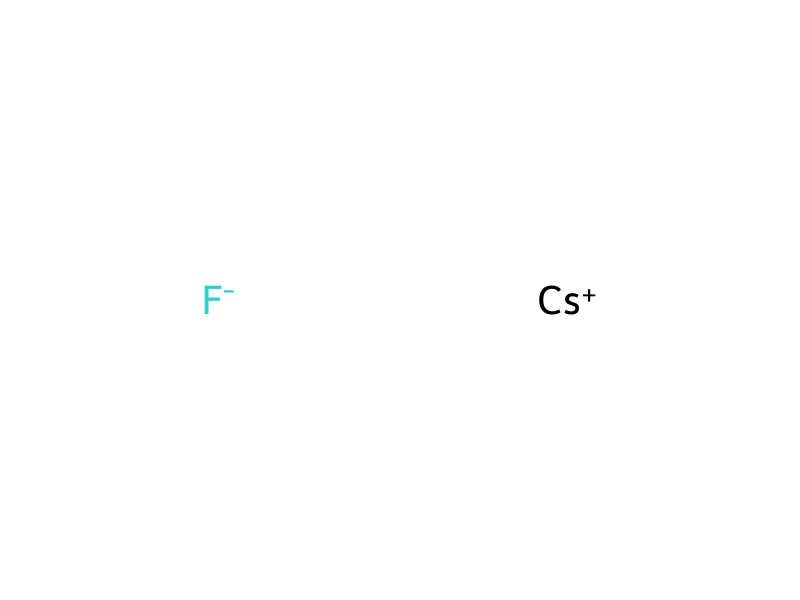
p-Hydroxyphenylacetamide (1 g) was dissolved in DMF (5 ml) under nitrogen atmosphere and the solution was cooled to 0° C. Cesium fluoride (3.02 g) and sodium iodide (0.1 g) were added thereto and the mixture was stirred for 1 hour. Then (R)-epichlorohydrin (0.62 g, 98.4% e.e.) was added thereto and the mixture was stirred for 30 hours at the same temperature. After the reaction, the reaction mixture was dropped over a period of one hour in isopropylamine (9 g) previously cooled to 10° C. The temperature of the solution was raised to room temperature and stirred for 12 hours. Then the product was treated in the same manner as Example 1 to give 1.53 g of (S)-atenolol (yield 87%, optical purity 98.3% e.e.) as colorless crystals.
Workup
- stirringthe mixture was stirred for 30 hours at the same temperature
- customAfter the reaction
- temperaturepreviously cooled to 10° C
- temperatureThe temperature of the solution was raised to room temperature
- stirringstirred for 12 hours
- additionThen the product was treated in the same manner as Example 1
Sources & evidence
- ORD record
- ord-685b4a3cf6504058be4d83080647dd21
- Source dataset
- uspto-grants-2000_05
- Patent number
- US06057476
Reaction notes
Loading…