Methanol → HCID 131716725, compound
Reaction equation

[C:1]([O:5][CH3:6])(=[O:4])[CH:2]=[CH2:3].[C:7]([O:11][CH3:12])(=[O:10])[CH2:8][SH:9].[CH2:13](N(CC)CC)C.[OH2:20].[CH3:21][OH:22]>>[CH3:7][C:8]([CH3:13])([S:9][CH2:3][CH2:2][C:1]([OH:5])=[O:4])[C:21]([OH:22])=[O:20].[CH3:12][O:11][C:7](=[O:10])[CH2:8][S:9][CH2:3][CH2:2][C:1]([O:5][CH3:6])=[O:4]Participants


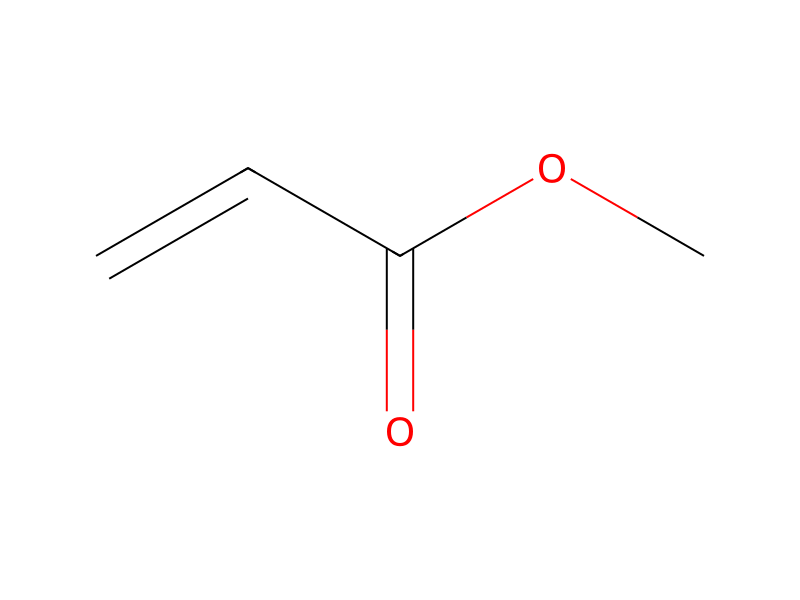



Procedure
Methyl acrylate (820.67 g., 9.5327 mol) was added, over 100 min, under N2, to a magnetically stirred solution of methyl thioglycolate (1007.18 g, 9.489 mol) and triethylamine (138.96 g, 192 mL, 1.373 mol) in methanol (1000 mL, plus a subsequent 239.83 g from a wash-bottle, for rinsings). After the reaction vessel became warm, the reaction vessel (a 4L heavy-wall Erlenmeyer flask) was immersed in a bucket of cold water to moderate the reaction. The reaction mixture was permitted to stand overnight and was then concentrated on a rotary evaporator. The residue was distilled in vacuo in two lots (bp 122°-131° C./1.5 torr) to yield 1804.37 g (98.9%). NMR and GC/MS data agreed with the proposed structure, which is a known compound (see R. B. Woodward and R. H. Eastman, J. Am. Chem. Soc., 68, 2229-2235 (1946)).
Workup
- temperatureAfter the reaction vessel became warm
- customthe reaction
- concentrationwas then concentrated on a rotary evaporator
- distillationThe residue was distilled in vacuo in two lots (bp 122°-131° C./1.5 torr)
- customto yield 1804.37 g (98.9%)
Sources & evidence
- ORD record
- ord-532a77814f3241f69d64f8600607affa
- Source dataset
- uspto-grants-1990_12
- Patent number
- US04974609
Reaction notes
Loading…