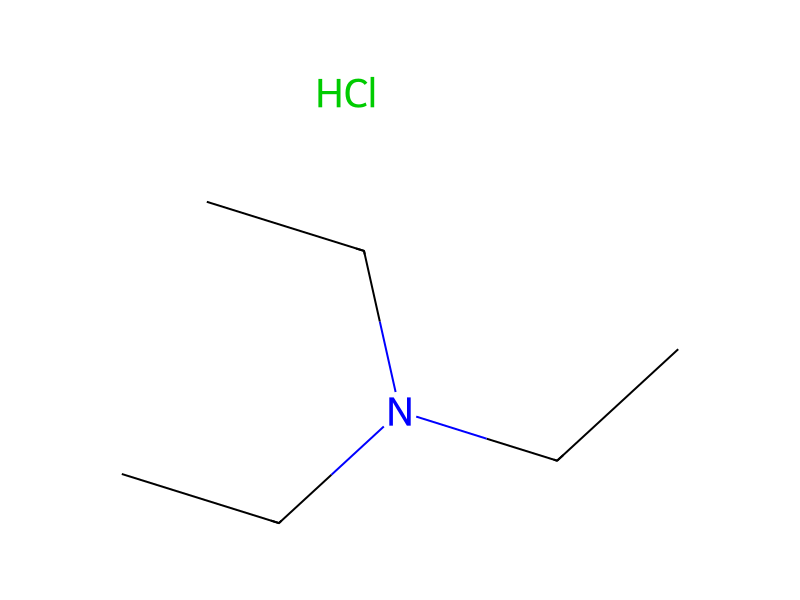
Triethylamine → HCID 14624273, compound
Reaction equation

[O:1]1[CH:5]=[CH:4][CH:3]=[C:2]1[CH:6]([NH2:9])[C:7]#[N:8].C(N(CC)CC)C.[CH2:17]([C:19]1[S:20][C:21]([C:26](Cl)=[O:27])=[C:22]([CH2:24][CH3:25])[N:23]=1)[CH3:18].Cl.C(N(CC)CC)C>C(OCC)(=O)C.O>[C:7]([CH:6]([NH:9][C:26]([C:21]1[S:20][C:19]([CH2:17][CH3:18])=[N:23][C:22]=1[CH2:24][CH3:25])=[O:27])[C:2]1[O:1][CH:5]=[CH:4][CH:3]=1)#[N:8]Participants
7





Procedure
2.80 g of alpha-(2-furyl)-alpha-aminoacetonitrile and 6.0 g of triethylamine were dissolved in 50 ml of ethyl acetate, and with stirring, 2.1 g of the 2,4-diethylthiazole-5-carboxylic acid chloride was added dropwise, and the mixture was stirred at room temperature for 1 hour. Water (150 ml) was added, and the precipitated triethylamine hydrochloride was dissolved. The ethyl acetate layer was separated, washed with water and dried over sodium sulfate. The dried ethyl acetate layer was evaporated under reduced pressure to remove the solvent. The residue was recrystallized from n-hexane to give 2.41 g (yield 80.0%) of the desired N-(alpha-cyanofurfuryl)-2,4-dimethylthiazole-5-carboxylic acid amide.
Workup
- stirringthe mixture was stirred at room temperature for 1 hour
- customThe ethyl acetate layer was separated
- washwashed with water
- dry with materialdried over sodium sulfate
- customThe dried ethyl acetate layer was evaporated under reduced pressure
- customto remove the solvent
- customThe residue was recrystallized from n-hexane
Sources & evidence
- ORD record
- ord-56e9a72b40954118943b559787322d84
- Source dataset
- uspto-grants-1990_12
- Patent number
- US04980363
Reaction notes
Loading…