4-Bromobenzyl alcohol → (4-Bromo-benzyloxy)-triisopropyl-silane
Reaction equation

[Br:1][C:2]1[CH:9]=[CH:8][C:5]([CH2:6][OH:7])=[CH:4][CH:3]=1.C1CCN2C(=NCCC2)CC1.[CH:21]([Si:24](Cl)([CH:28]([CH3:30])[CH3:29])[CH:25]([CH3:27])[CH3:26])([CH3:23])[CH3:22]>ClCCl>[Br:1][C:2]1[CH:9]=[CH:8][C:5]([CH2:6][O:7][Si:24]([CH:28]([CH3:30])[CH3:29])([CH:25]([CH3:27])[CH3:26])[CH:21]([CH3:23])[CH3:22])=[CH:4][CH:3]=1Participants
5
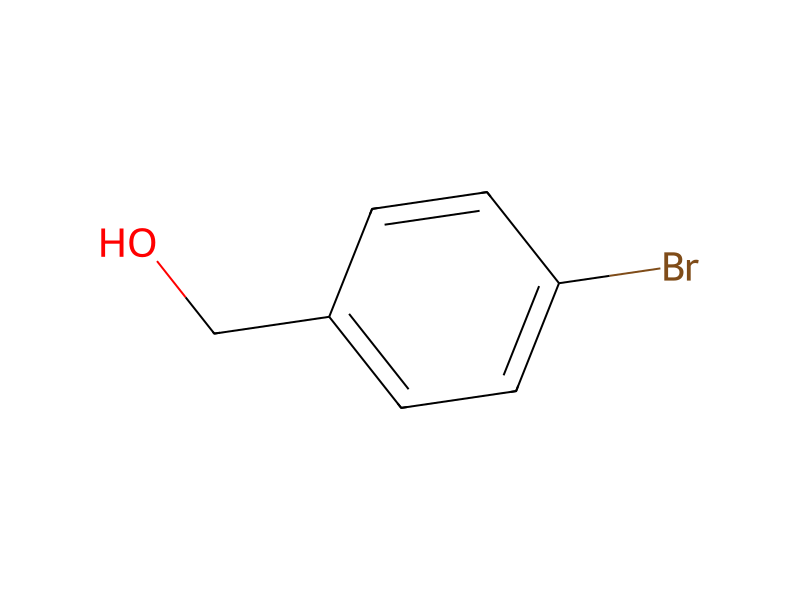




Procedure
Stir a solution of 4-bromobenzyl alcohol (50 g, 267.3 mmol), DBU (48 ml, 320.8 mmol) and dichloromethane (600 mL) in an ice/water bath. Add triisopropylsilylchloride (63 mL, 294 mmol) over 10 min via an addition funnel and stir the reaction mixture for 20 hours at room temperature. Wash the mixture with water (2×600 mL), dry over anhydrous magnesium sulfate, filter and concentrate. Purify the residue via silica chromatography eluting with 9:1 hexanes:ethyl acetate to give the title compound (91.5 g, 99%) as a colorless oil. 1H NMR (300 MHz, CDCl3) δ 7.47-7.50 (m, 2H), 7.28-7.30 (m, 2H), 4.81 (s, 1.11-1.24 (m, 21H).
Workup
- washWash the mixture with water (2×600 mL)
- dry with materialdry over anhydrous magnesium sulfate
- filtrationfilter
- concentrationconcentrate
- customPurify the residue via silica chromatography
- washeluting with 9:1 hexanes
Sources & evidence
- ORD record
- ord-bb38c921a7044cfaae42a137ac2955be
- Source dataset
- uspto-grants-2010_10
- Patent number
- US07816523B2
Reaction notes
Loading…