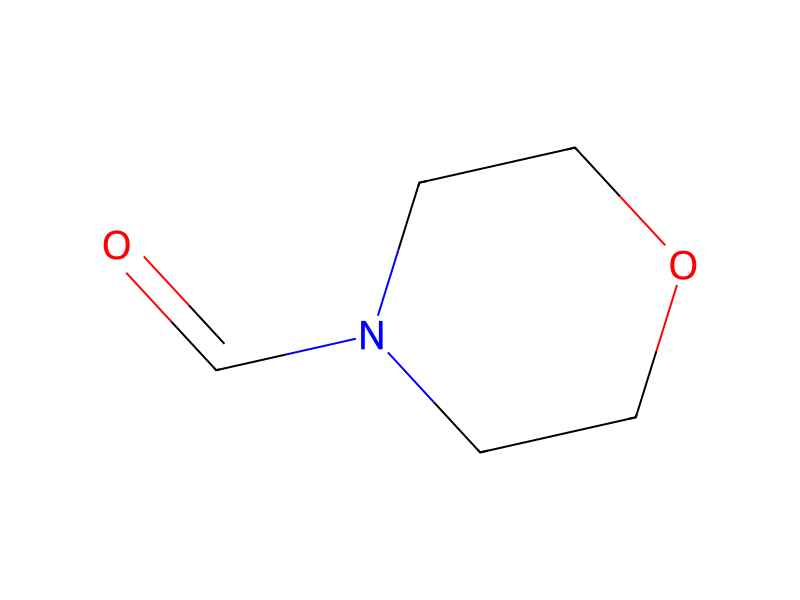
N-Formylmorpholine → HCID 59517315, compound
Reaction equation

Br[C:2]1[CH:3]=[C:4]([CH2:12][CH2:13][O:14][CH3:15])[C:5]([O:10][CH3:11])=[C:6]([O:8][CH3:9])[CH:7]=1.C([Li])CCC.[CH:21](N1CCOCC1)=[O:22].[Cl-].[NH4+]>C1COCC1.C(OCC)(=O)C>[CH3:9][O:8][C:6]1[CH:7]=[C:2]([CH:3]=[C:4]([CH2:12][CH2:13][O:14][CH3:15])[C:5]=1[O:10][CH3:11])[CH:21]=[O:22]Participants






Conditions
- Temperature
- -70 °C
Procedure
To a solution of 1.3 g of 5-bromo-1,2-dimethoxy-3-(2-methoxyethyl)benzene in 20 ml of THF there was added dropwise 2 ml of n-butyllithium (2.66 M, hexane solution) at −70° C. under a nitrogen atmosphere. After stirring at −70° C. for 30 minutes, 0.7 ml of N-formylmorpholine was added and the temperature was raised from −70° C. to 0° C. over a period of 30 minutes. Saturated aqueous ammonium chloride was added to the reaction mixture, and extraction was performed with ethyl acetate. The organic layer was dried over anhydrous magnesium sulfate. The desiccating agent was filtered off and the filtrate was concentrated under reduced pressure. The residue was purified by silica gel column chromatography (ethyl acetate-heptane) to give the title compound (806 mg) as an oil.
Workup
- temperaturethe temperature was raised from −70° C. to 0° C. over a period of 30 minutes
- dry with materialThe organic layer was dried over anhydrous magnesium sulfate
- filtrationThe desiccating agent was filtered off
- concentrationthe filtrate was concentrated under reduced pressure
- customThe residue was purified by silica gel column chromatography (ethyl acetate-heptane)
Sources & evidence
- ORD record
- ord-6bdd2b526aab47a59e04baec1b41cdbd
- Source dataset
- uspto-grants-2010_10
- Patent number
- US07816522B2
Reaction notes
Loading…