Sodium Carbonate → Ticlopidine
Reaction equation

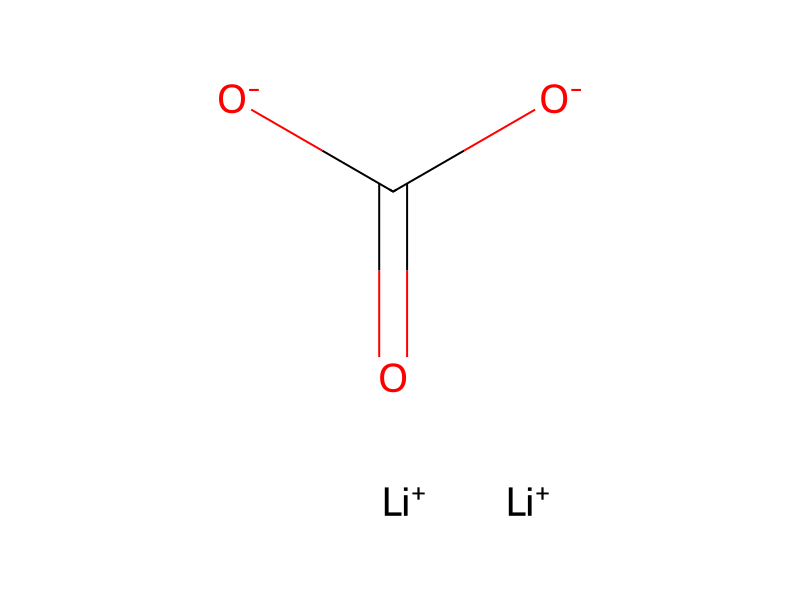
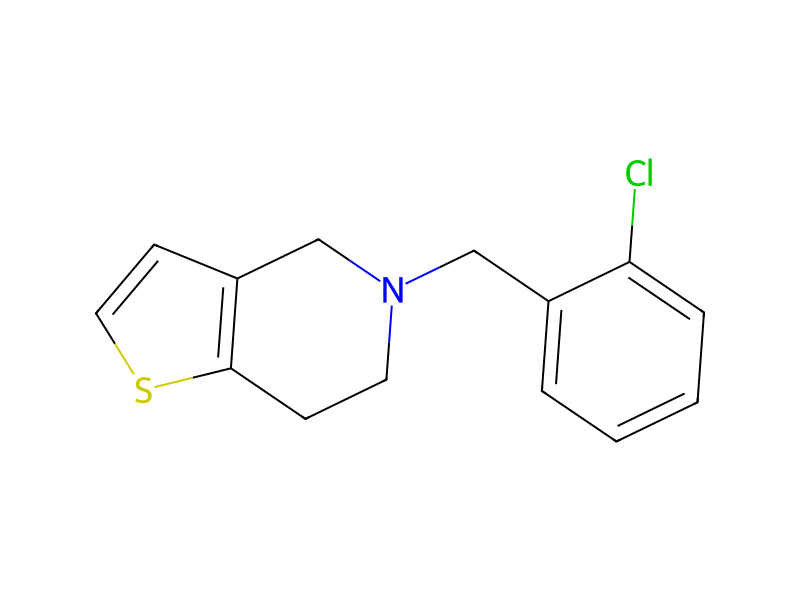
[S:1]1[C:9]2[CH2:8][CH2:7][NH:6][CH2:5][C:4]=2[CH:3]=[CH:2]1.[Cl:10][C:11]1[CH:18]=[CH:17][CH:16]=[CH:15][C:12]=1[CH2:13]Cl.C(=O)([O-])[O-].[K+].[K+].C(=O)([O-])[O-].[Na+].[Na+].C(=O)([O-])[O-].[Li+].[Li+]>O.C1COCC1.C(#N)C.ClCCl>[CH:16]1[CH:17]=[CH:18][C:11]([Cl:10])=[C:12]([CH2:13][N:6]2[CH2:5][C:4]3[CH:3]=[CH:2][S:1][C:9]=3[CH2:8][CH2:7]2)[CH:15]=1Participants
Reactant 5




Product 1
Reagents, catalysts & solvents 4




Procedure
In a preferred alkylation procedure, 4,5,6,7-tetrahydrothieno[3,2-c]pyridine in a solvent (e.g., a polar solvent, such as THF, dichloromethane or acetonitrile; preferably 5-15% wet THF) and a compound of Formula 4 (preferably o-chlorobenzyl chloride) are added to a molar excess of a base (e.g., potassium carbonate, sodium carbonate, or lithium carbonate; preferably potassium carbonate) that has been wetted with water (about 5 to 15%, preferably about 10% of the volume charge) and the reaction mixture is refluxed until disappearance of the starting materials is confirmed by tlc (about 8 to 42 hours, preferably about 18-24 hours). The solvent is removed (by vacuum or by displacement with another solvent such as toluene), and the product is washed with water and then concentrated in vacuo. Using the preferred compound of Formula 4, ticlopidine free base (Formula III) is formed (about 90-95% yield) as a light yellow oil. ##STR6##
Workup
- additioncharge) and the reaction mixture
- temperatureis refluxed until disappearance of the starting materials
- customabout 8 to 42 hours, preferably about 18-24 hours
- customThe solvent is removed (by vacuum
- washby displacement with another solvent such as toluene), and the product is washed with water
- concentrationconcentrated in vacuo
Sources & evidence
- ORD record
- ord-d71eb0a66b634e25987bb1709980a1a4
- Source dataset
- uspto-grants-1990_03
- Patent number
- US04906756
Reaction notes
Loading…