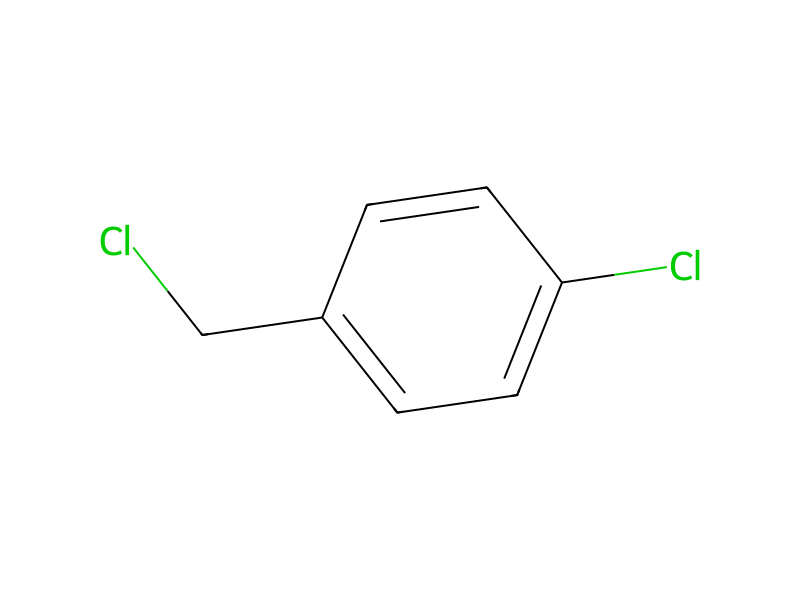
1-Chloro-4-(chloromethyl)benzene → HCID 14072292, compound
Reaction equation

[Cl:1][C:2]1[CH:7]=[CH:6][C:5]([N:8]2[C:13](=[O:14])[CH:12]=[C:11]([OH:15])[CH:10]=[N:9]2)=[CH:4][CH:3]=1.[Cl:16][C:17]1[CH:24]=[CH:23][C:20]([CH2:21]Cl)=[CH:19][CH:18]=1.C(=O)([O-])[O-].[K+].[K+]>CN(C)C=O>[Cl:16][C:17]1[CH:24]=[CH:23][C:20]([CH2:21][O:15][C:11]2[CH:10]=[N:9][N:8]([C:5]3[CH:4]=[CH:3][C:2]([Cl:1])=[CH:7][CH:6]=3)[C:13](=[O:14])[CH:12]=2)=[CH:19][CH:18]=1Participants
5




Procedure
In 50 ml of N,N-dimethylformamide were dissolved 2.0 g (9.0 m mol) of 2-(4-chlorophenyl)-5-hydroxy-3(2H)-pyridazinone and 1.5 g (9.3 m mol) of p-chlorobenzyl chloride, and thereto was added 1.7 g of anhydrous potassium carbonate. The reaction mixture was heated under stirring on an oil bath at 100°-120° C. for one hour. Then, the procedure in Synthesis Example 13 were repeated to give 2.5 g of the intended compound.
Workup
- temperatureThe reaction mixture was heated
- customThen, the procedure in Synthesis Example 13
Sources & evidence
- ORD record
- ord-6c0a06bae05e47ccbd66c2973c156221
- Source dataset
- uspto-grants-1990_03
- Patent number
- US04910201
Reaction notes
Loading…