Triphenylphosphine → HCID 54364824, compound
Reaction equation

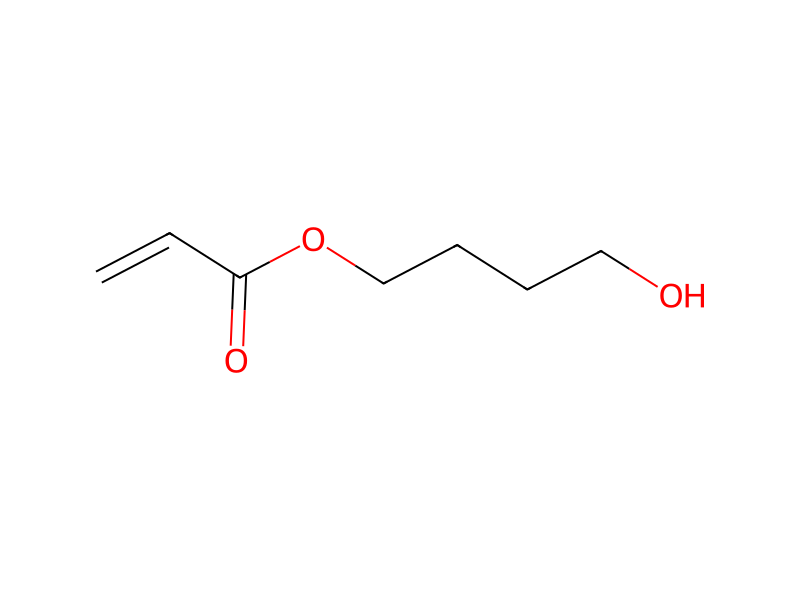
[C:1]1(P(C2C=CC=CC=2)C2C=CC=CC=2)C=CC=C[CH:2]=1.[OH:20][C:21]1[CH:26]=[CH:25][C:24]([C:27]2[CH:32]=[CH:31][C:30]([C:33]([OH:35])=[O:34])=[CH:29][CH:28]=2)=[CH:23][CH:22]=1.C(O[CH2:41][CH2:42][CH2:43][CH2:44][OH:45])(=O)C=C.N(C(OCC)=O)=N[C:48](OCC)=O>O1CCCC1>[C:44]([CH2:43][CH2:42][CH2:41][CH2:48][O:34][C:33]([C:30]1[CH:31]=[CH:32][C:27]([C:24]2[CH:23]=[CH:22][C:21]([OH:20])=[CH:26][CH:25]=2)=[CH:28][CH:29]=1)=[O:35])(=[O:45])[CH:1]=[CH2:2]Participants
6





Conditions
- Temperature
- 0 °C
Procedure
5.24 g (20 mmol) of triphenylphosphine (TPP) are added at 0° C. to a solution of 4.28 g (20 mmol) of 4′-hydroxyl-4-biphenylcarboxylic acid and 2.88 g (29 mmol) of 4-hydroxybutyl acrylate in 100 ml of tetrahydrofuran (THF) and then, at the same temperature, 3.50 g (20 mmol) of diethyl azodicarboxylate (DEAD) are added dropwise thereto. The mixture is stirred for one hour at 0° C. and then overnight at room temperature. The mixture is then concentrated and the residue is purified by chromatography on silica gel using cyclohexane/ethyl acetate 2:1 to obtain 4.32 g of 4′-hydroxy-biphenyl-4-carboxylic acid 4-acryloylbutyl ester.
Workup
- customovernight
- customat room temperature
- concentrationThe mixture is then concentrated
- customthe residue is purified by chromatography on silica gel
Sources & evidence
- ORD record
- ord-f6f669dc7edb4da0a0b630ba810bc30c
- Source dataset
- uspto-grants-2003_09
- Patent number
- US06613245B1
Reaction notes
Loading…