Hydrogen Peroxide → Quinacridone
Reaction equation

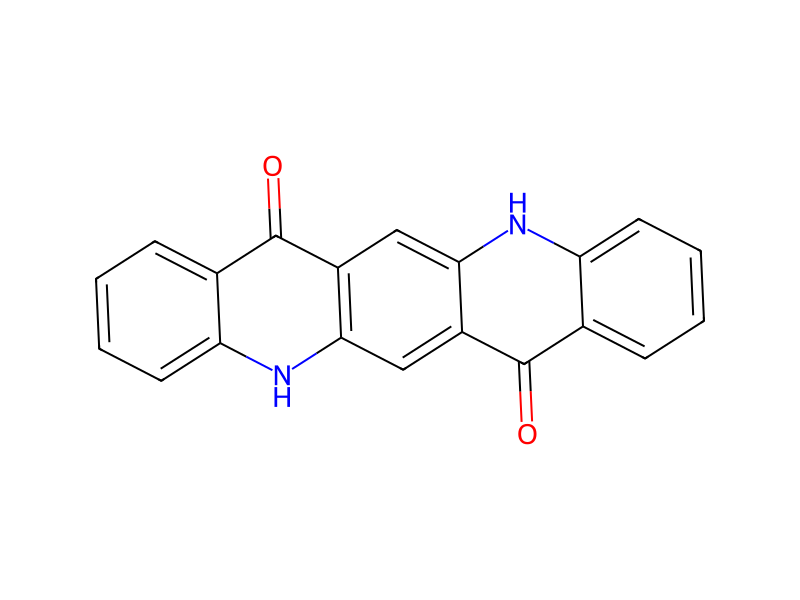
C1(C=CC(O)=CC=1)O.OO.[CH2:11]1[C:16]2[NH:17][C:18]3[C:23]([C:24](=[O:25])[C:15]=2[CH2:14][C:13]2[NH:26][C:27]4[C:32]([C:33](=[O:34])[C:12]1=2)=[CH:31][CH:30]=[CH:29][CH:28]=4)=[CH:22][CH:21]=[CH:20][CH:19]=3>>[CH:30]1[CH:31]=[C:32]2[C:33]([C:12]3[C:13]([NH:26][C:27]2=[CH:28][CH:29]=1)=[CH:14][C:15]1[C:24]([C:23]2[C:18]([NH:17][C:16]=1[CH:11]=3)=[CH:19][CH:20]=[CH:21][CH:22]=2)=[O:25])=[O:34]Participants
4



Procedure
While the hydroquinone assisted hydrogen peroxide oxidation of 6,13-dihydroquinacridone produces a gamma-I quinacridone, surprisingly a combination of hydroquinone and pyrazolylmethyl quinacridone generates a gamma-II quinacridone. It is further surprising that the oxidation of 6,13-dihydroquinacridone in the presence of 2-naphthol creates a gamma-III quinacridone.
Sources & evidence
- ORD record
- ord-d1c55c3b0fd3493cb75f592396e77514
- Source dataset
- uspto-grants-2003_09
- Patent number
- US06626990B2
Reaction notes
Loading…