3-Methoxyaniline → 3-Methoxy-N,N-diphenylaniline
Reaction equation

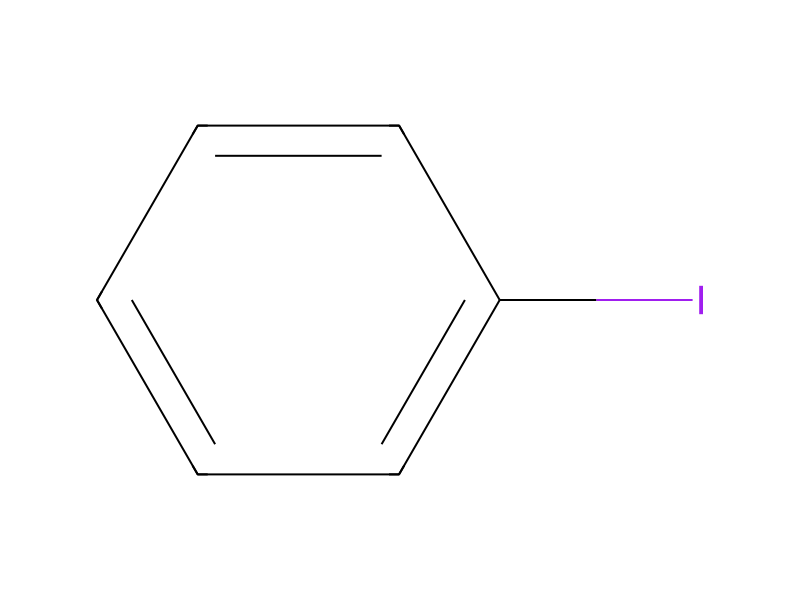
[CH3:1][O:2][C:3]1[CH:8]=[CH:7][CH:6]=[C:5]([NH2:9])[CH:4]=1.I[C:11]1[CH:16]=[CH:15][CH:14]=[CH:13][CH:12]=1.C1O[CH2:33][CH2:32]OCCOCCOCCOCCOC1.C(=O)([O-])[O-].[K+].[K+]>C1(OC2C=CC=CC=2)C=CC=CC=1.[Cu]>[CH3:1][O:2][C:3]1[CH:4]=[C:5]([N:9]([C:33]2[CH:32]=[CH:5][CH:4]=[CH:3][CH:8]=2)[C:11]2[CH:16]=[CH:15][CH:14]=[CH:13][CH:12]=2)[CH:6]=[CH:7][CH:8]=1Participants
7
Reactant 4



Product 1

Reagents, catalysts & solvents 2


Procedure
3-methoxytriphenylamine was prepared by a phase transfer variant of the Ullmann coupling procedure (S. Gauthier and J. M. J. Fréchet, Synthesis, 1987, 1331) in which 37.34 g m-Anisidine, 142.47 g iodobenzene, 74.93 g copper powder, 2.20 g 18-crown-6 and 320.8 g anhydrous potassium carbonate in 500 ml phenyl ether were placed into a 1 liter three necked round bottom flask equipped with overhead stirrer, reflux condenser, nitrogen inlet, thermowell, and heating mantle and heated at reflux overnight. The solids were removed by filtration and the solvents by vacuum distillation. The resulting brown oil is used in step 2 below.
Workup
- customequipped with overhead stirrer
- temperaturereflux condenser, nitrogen inlet
- temperaturethermowell, and heating mantle
- temperatureheated
- temperatureat reflux overnight
- customThe solids were removed by filtration
- distillationthe solvents by vacuum distillation
Sources & evidence
- ORD record
- ord-e298de9ff27f4050b5cd27390b556704
- Source dataset
- uspto-grants-2003_09
- Patent number
- US06627111B2
Reaction notes
Loading…