3-Hydroxybenzaldehyde → 3-[(4-methylbenzyl)oxy]benzaldehyde
Reaction equation

[OH:1][C:2]1[CH:3]=[C:4]([CH:7]=[CH:8][CH:9]=1)[CH:5]=[O:6].[CH3:10][C:11]1[CH:18]=[CH:17][C:14]([CH2:15]Cl)=[CH:13][CH:12]=1.C(=O)([O-])[O-].[K+].[K+].[I-].[Na+]>CC(C)=O>[CH3:10][C:11]1[CH:18]=[CH:17][C:14]([CH2:15][O:1][C:2]2[CH:3]=[C:4]([CH:7]=[CH:8][CH:9]=2)[CH:5]=[O:6])=[CH:13][CH:12]=1Participants
Reactant 4
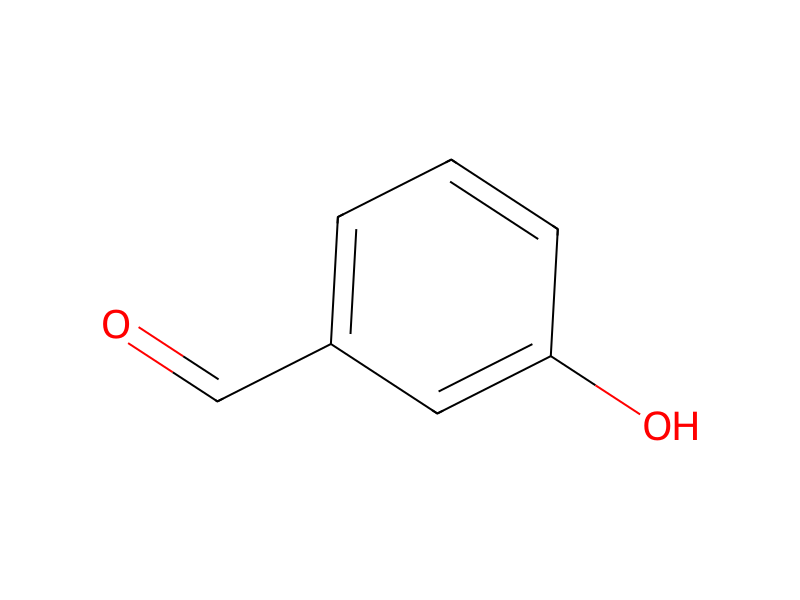



Product 1

Reagents, catalysts & solvents 1

Procedure
To 3-hydroxybenzaldehyde (5.00 g) dissolved in acetone (70 ml) were added 4-methylbenzyl chloride (6.51 ml), potassium carbonate (8.49 g) and sodium iodide (7.36 g), and the resulting mixture was heated at reflux for 24 hours and was then evaporated under reduced pressure to remove the solvent. The residue was mixed with water (200 ml) and was extracted with ethyl acetate. The organic layer was washed with an aqueous saturated solution of sodium chloride was dried with anhydrous sodium sulfate, and was then evaporated under reduced pressure to remove the solvent. The thus-obtained residue was subjected to purification using column chromatography (ethyl acetate/hexane=1/10) to obtain 3-(4-methylbenzyloxy)benzaldehyde (7.86 g) as a colorless oily substance.
Workup
- temperaturethe resulting mixture was heated
- temperatureat reflux for 24 hours
- customwas then evaporated under reduced pressure
- customto remove the solvent
- additionThe residue was mixed with water (200 ml)
- extractionwas extracted with ethyl acetate
- washThe organic layer was washed with an aqueous saturated solution of sodium chloride
- dry with materialwas dried with anhydrous sodium sulfate
- customwas then evaporated under reduced pressure
- customto remove the solvent
- customThe thus-obtained residue was subjected to purification
Sources & evidence
- ORD record
- ord-a2b121b0e42d414aa728b929e2f3d6aa
- Source dataset
- uspto-grants-2003_09
- Patent number
- US06627651B1
Reaction notes
Loading…