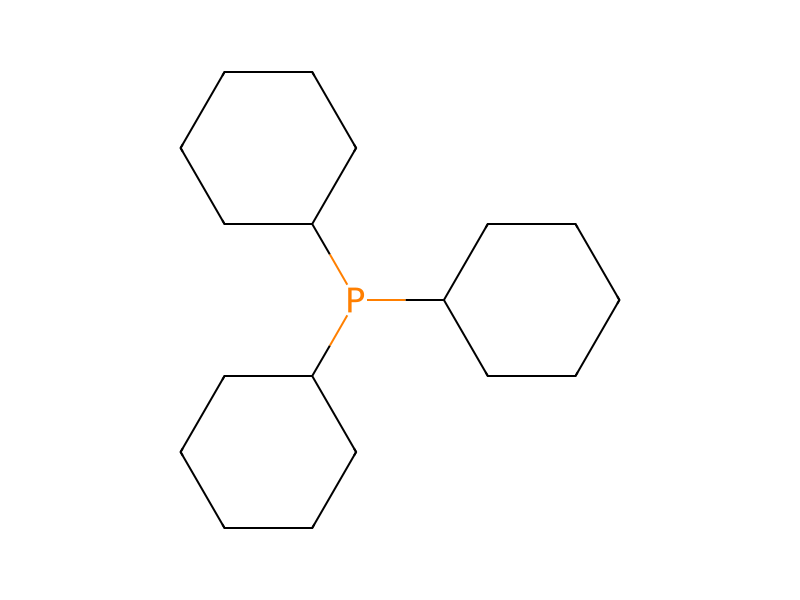
Tricyclohexylphosphine → HCID 68772045, compound
Reaction equation

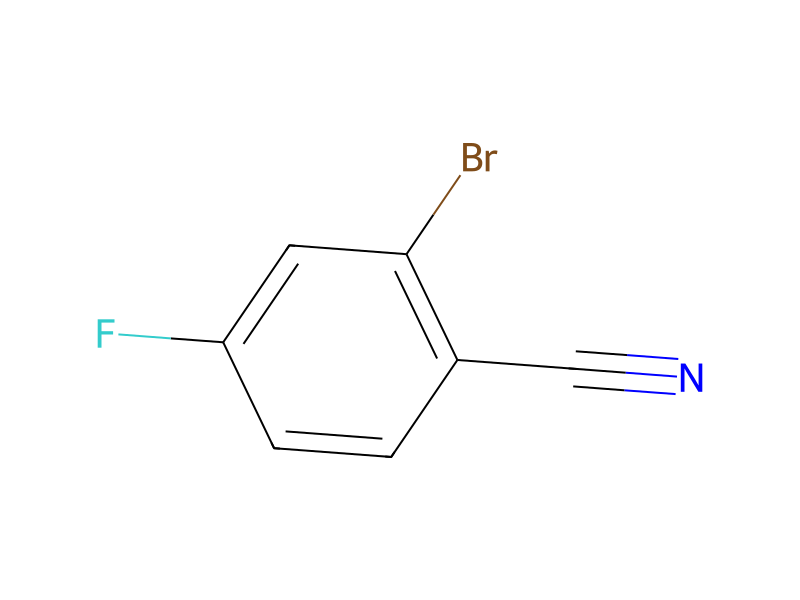
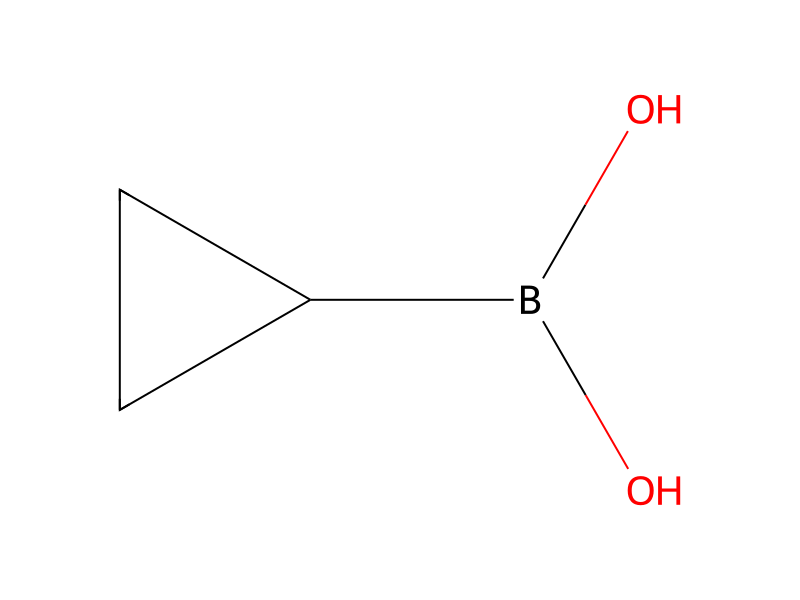
Br[C:2]1[CH:9]=[C:8]([F:10])[CH:7]=[CH:6][C:3]=1[C:4]#[N:5].C1(P([CH:24]2[CH2:29][CH2:28]CCC2)C2CCCCC2)CCCCC1.O.P([O-])([O-])([O-])=O.[K+].[K+].[K+].C1(B(O)O)CC1>O.C1(C)C=CC=CC=1>[CH:28]1([C:2]2[CH:9]=[C:8]([F:10])[CH:7]=[CH:6][C:3]=2[C:4]#[N:5])[CH2:29][CH2:24]1Participants




Conditions
- Temperature
- 100 °C
Procedure
500 mg commercially available 2-Bromo-4-fluorobenzonitrile, 70 mg tricyclohexylphosphine, 2.04 g tri potassium phosphate mono hydrate and 278 mg cyclopropylboronic acid placed in a reaction vessel and 11 ml toluene were added. The mixture was degassed with argon, then 561 mg palladium(II)acetate were added and the reaction mixture stirred at 100° C. for 1.5 hours. To the cooled reaction mixture was added 30 ml water and the mixture was extracted five times with portions of 30 ml ethyl acetate. The combined organic layers were dried over MgSO4, the solvent removed in vacuo and the resulting residue purified on silica gel with the eluent heptane=>n-heptane:ethyl acetate=5:1 to obtain 310 mg 2-Cyclopropyl-4-fluoro-benzonitrile as yellow solid.
Workup
- customThe mixture was degassed with argon
- addition561 mg palladium(II)acetate were added
- customTo the cooled reaction mixture
- extractionthe mixture was extracted five times with portions of 30 ml ethyl acetate
- dry with materialThe combined organic layers were dried over MgSO4
- customthe solvent removed in vacuo
- customthe resulting residue purified on silica gel with the eluent heptane=>n-heptane
Sources & evidence
- ORD record
- ord-b5895b7cdbcf4e6da036df2c8b96195c
- Source dataset
- uspto-grants-2010_11
- Patent number
- US07834030B2
Reaction notes
Loading…