Water → 3-(4-Nitrophenoxy)pyridine
Reaction equation

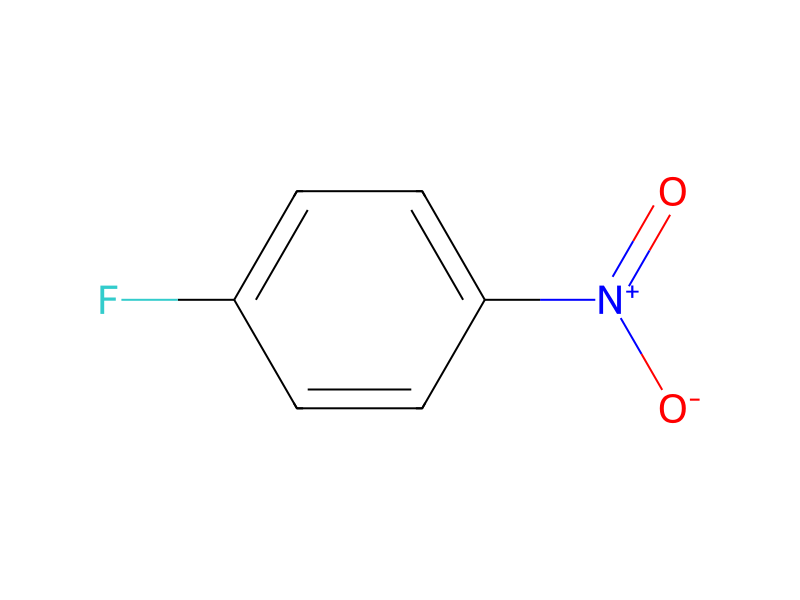
F[C:2]1[CH:7]=[CH:6][C:5]([N+:8]([O-:10])=[O:9])=[CH:4][CH:3]=1.[OH:11][C:12]1[CH:13]=[N:14][CH:15]=[CH:16][CH:17]=1.C(=O)([O-])[O-].[K+].[K+].O>CN(C=O)C>[N+:8]([C:5]1[CH:6]=[CH:7][C:2]([O:11][C:12]2[CH:13]=[N:14][CH:15]=[CH:16][CH:17]=2)=[CH:3][CH:4]=1)([O-:10])=[O:9]Participants
Reactant 4



Product 1

Reagents, catalysts & solvents 1

Conditions
- Temperature
- 35 °C
Procedure
To a solution of 1-fluoro-4-nitrobenzene (50.00 g, 354.36 mmol) in DMF (450 ml) was added 3-hydroxypyridine (33.70 g, 354.36 mmol) under nitrogen. The reaction mixture was heated to 35° C. and then potassium carbonate (102.85 g, 744.15 mmol) was added in one portion. The reaction was very exothermic, and the temperature rapidly increased to 115° C., then gradually increased to 125° C. The mixture was then cooled to 90° C. and stirred at 90° C. for 2 h. The mixture was cooled to room temperature and poured into 2.5 L of water. The mixture was extracted with ethyl acetate (3×), and the combined organic phases were washed with water (3×) and brine (1×), dried over sodium sulfate, and evaporated at reduced pressure. The brown solid residue was stirred in MTBE at reflux, then filtered, and the filtrate was concentrated at reduced pressure to give a yellow crystalline solid that was triturated with ether to give 23.79 g (31%) of the desired product. The brown solids that did not dissolve in MTBE (43.89 g, 57%) were also of sufficient purity for use in the next step (i.e., total yield 88%). 1H-NMR (DMSO-d6) δ 8.50 (m, 2H), 8.24 (d, J=9.1 Hz, 2H), 7.67 (ddd, J=8.4, 2.9, 1.3 Hz, 1H), 7.52 (dd, J=8.3, 4.7 Hz, 1H), 7.18 (d, J=9.0 Hz, 2H); MS LC-MS [M+H]+=217, RT=1.67 min. In a subsequent experiment, the potassium carbonate was added to the 1-fluoro-4-nitrobenzene in DMF under nitrogen. To this stirred solution was dropwise added a solution of the 3-hydroxypyridine in DMF, and the exotherm caused the mixture to gradually warm up to 38° C. The reaction mixture was then heated to 60° C. for 2 h. Reaction work up as described above gave the desired product.
Workup
- temperaturethe temperature rapidly increased to 115° C.
- temperaturegradually increased to 125° C
- temperatureThe mixture was then cooled to 90° C.
- temperatureThe mixture was cooled to room temperature
- extractionThe mixture was extracted with ethyl acetate (3×)
- washthe combined organic phases were washed with water (3×) and brine (1×)
- dry with materialdried over sodium sulfate
- customevaporated at reduced pressure
- stirringThe brown solid residue was stirred in MTBE
- temperatureat reflux
- filtrationfiltered
- concentrationthe filtrate was concentrated at reduced pressure
- customto give a yellow crystalline solid
- customthat was triturated with ether
Sources & evidence
- ORD record
- ord-3aafb13da3a6463a9d9a4ab834ced672
- Source dataset
- uspto-grants-2010_11
- Patent number
- US07838524B2
Reaction notes
Loading…