Hydrazine → HCID 45095463, compound
Reaction equation

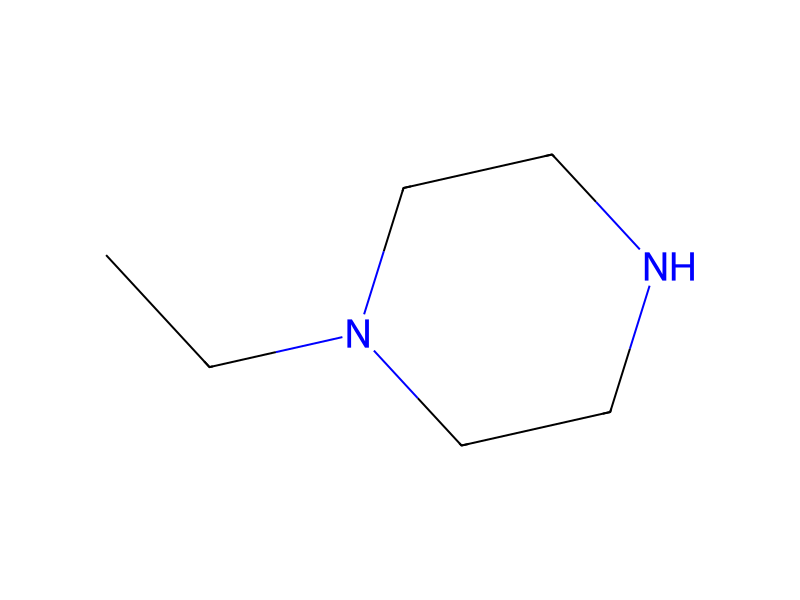
Cl[C:2]1[CH:7]=[C:6](Cl)[N:5]=[CH:4][N:3]=1.C(=O)([O-])[O-].[K+].[K+].[CH2:15]([N:17]1[CH2:22][CH2:21][NH:20][CH2:19][CH2:18]1)[CH3:16].[NH2:23][NH2:24]>C(O)(C)C>[CH2:15]([N:17]1[CH2:22][CH2:21][N:20]([C:6]2[N:5]=[CH:4][N:3]=[C:2]([NH:23][NH2:24])[CH:7]=2)[CH2:19][CH2:18]1)[CH3:16]Participants
6
Reactant 4



Product 1

Reagents, catalysts & solvents 1

Procedure
Dissolve 4,6-dichloropyrimidine, (1.1 g, 7.4 mmol), in 20 mL isopropanol, add potassium carbonate, (2 g, 15 mmol), and N-ethylpiperazine, (843 mg, 7.4 mmol). Stir at rt for 18 h, then add hydrazine, (1.6 g, 50 mmol) and heat to reflux for 22 h. Cool and filter, then evaporate the solvent from the filtrate. Take up the residue in 20 mL boiling acetonitrile and filter. Upon cooling, a white precipitate forms. Filter to obtain approx 1 g [6-(4-Ethyl-piperazin-1-yl)-pyrimidin-4-yl]-hydrazine as a white solid. (60%). MS ES+ 223.2
Workup
- temperatureto reflux for 22 h
- temperatureCool
- filtrationfilter
- customevaporate the solvent from the filtrate
- filtrationfilter
- temperatureUpon cooling
- filtrationFilter
Sources & evidence
- ORD record
- ord-4fab9f09015647dca6e9f8dc9af01b40
- Source dataset
- uspto-grants-2007_10
- Patent number
- US07279469B2
Reaction notes
Loading…