4-Chloroaniline → Propanamide, N-(4-chlorophenyl)-2,2-dimethyl-
Reaction equation

[Cl:1][C:2]1[CH:8]=[CH:7][C:5]([NH2:6])=[CH:4][CH:3]=1.[CH2:9]([Li])CCC.N1C=[CH:18][C:17]([CH:20]=[O:21])=[CH:16]C=1.C(OCC)(=O)C>C1COCC1>[Cl:1][C:2]1[CH:8]=[CH:7][C:5]([NH:6][C:20](=[O:21])[C:17]([CH3:9])([CH3:18])[CH3:16])=[CH:4][CH:3]=1Participants
6
Reactant 4


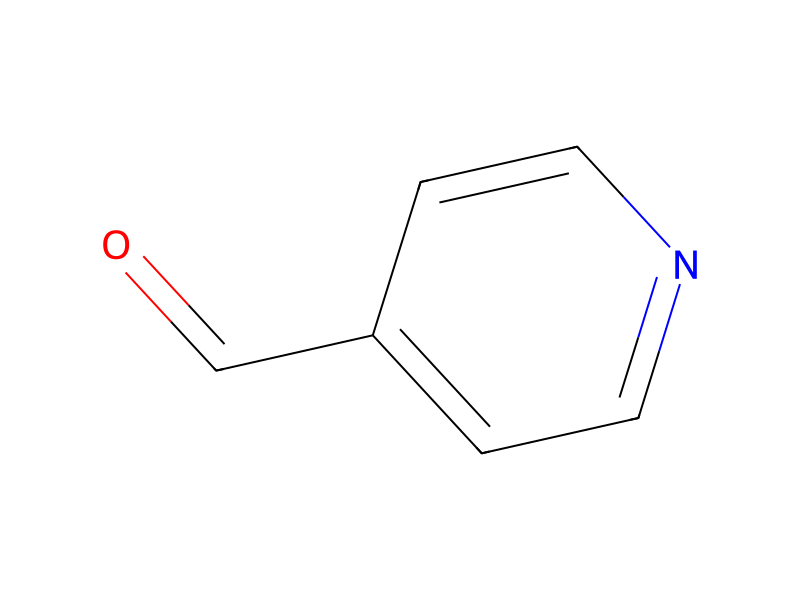

Product 1

Reagents, catalysts & solvents 1

Conditions
- Temperature
- -78 °C
Procedure
A solution of 2 g of pivaloyl protected 4-chloroaniline in 50 mL of THF was cooled to −78° C. under nitrogen. A solution of n-butyl lithium (14 mL of 2 N in hexane) was added dropwise. The mixture was allowed to warm 0° C. and stirring continued at 0° C. for one hour. A pyridine 4-carboxaldehyde was added to the solution and the reaction was stirred at 0° C. for one hour. The reaction mixture was poured into ethyl acetate and washed with water. The organic layer was separated and dried over MgSO4. Removal of the solvent followed by chromatography on silica gel (hexane:ethyl acetate 2:1 as eluent) afforded 1 g of the desired product.
Workup
- temperatureto warm 0° C.
- stirringthe reaction was stirred at 0° C. for one hour
- washwashed with water
- customThe organic layer was separated
- dry with materialdried over MgSO4
- customRemoval of the solvent
Sources & evidence
- ORD record
- ord-ed5ef4ed2e8e4dbd860fbbf1bd56acf0
- Source dataset
- uspto-grants-2007_10
- Patent number
- US07282502B2
Reaction notes
Loading…