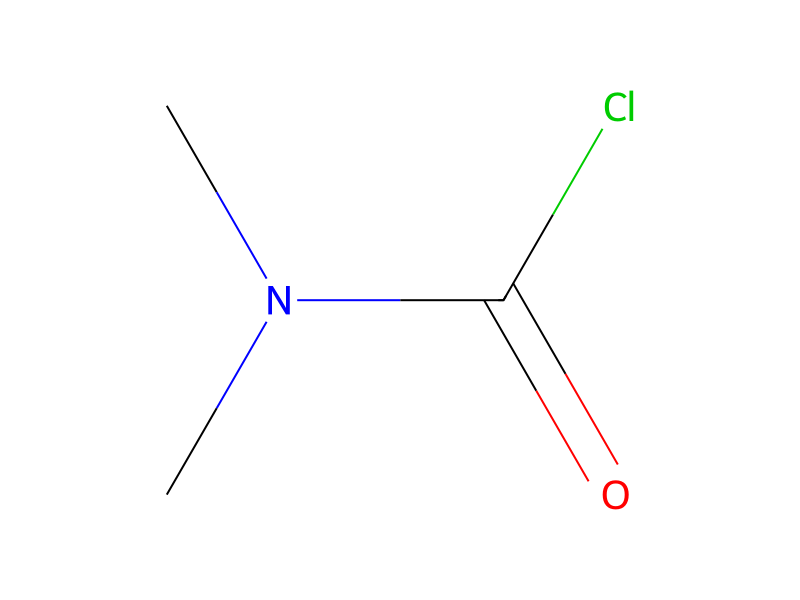
Dimethylcarbamoyl Chloride → 4-tert-Butylpyridine-2-carbonitrile
Reaction equation

C[Si]([C:5]#[N:6])(C)C.[C:7]([C:11]1[CH:16]=[CH:15][N+:14]([O-])=[CH:13][CH:12]=1)([CH3:10])([CH3:9])[CH3:8].CN(C)C(Cl)=O.C([O-])([O-])=O.[K+].[K+]>ClCCl>[C:5]([C:15]1[CH:16]=[C:11]([C:7]([CH3:10])([CH3:9])[CH3:8])[CH:12]=[CH:13][N:14]=1)#[N:6]Participants
6




Procedure
To trimethylsilylcyanide (25.0 ml, 187.5 mmol) was added a solution of 4-tert-butylpyridine-N-oxide (Description 3; 22.68 g, 150 mmol) in anhydrous dichloromethane (200 ml). To this mixture was added dropwise a solution of dimethyl carbamoyl chloride (17.26 ml, 187.5 mmol) in anhydrous dichloromethane (50 ml). The reaction mixture was stirred at room temperature for 24 hours. A solution of 10% aqueous K2CO3 (200 ml) was added dropwise and the resulting mixture stirred for 10 minutes. The organic layer was separated and the aqueous layer extracted with 2 further portions of dichloromethane (100 ml). The combined organic layers were dried (Na2SO4) and evaporated to give the title compound (24 g, 100%).
Workup
- stirringthe resulting mixture stirred for 10 minutes
- customThe organic layer was separated
- extractionthe aqueous layer extracted with 2 further portions of dichloromethane (100 ml)
- dry with materialThe combined organic layers were dried (Na2SO4)
- customevaporated
Sources & evidence
- ORD record
- ord-046ea40e34a648449afa77272eae99f3
- Source dataset
- uspto-grants-2007_10
- Patent number
- US07285563B2
Reaction notes
Loading…