Hydrochloric Acid → 4-(2,2,2-trifluoro-1-hydroxyethyl)benzonitrile
Reaction equation

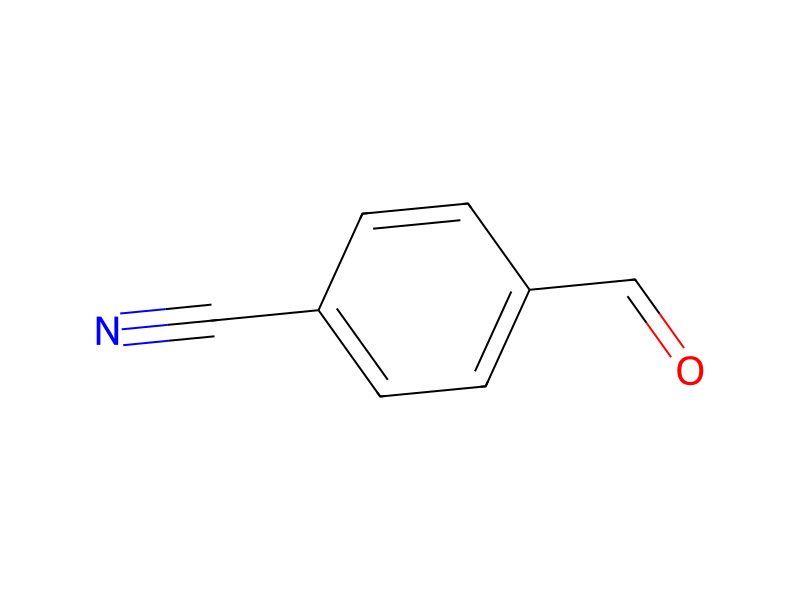
[CH:1]([C:3]1[CH:10]=[CH:9][C:6]([C:7]#[N:8])=[CH:5][CH:4]=1)=[O:2].[F:11][C:12]([Si](C)(C)C)([F:14])[F:13].[F-].C([N+](CCCC)(CCCC)CCCC)CCC.Cl>O1CCCC1>[F:11][C:12]([F:14])([F:13])[CH:1]([C:3]1[CH:10]=[CH:9][C:6]([C:7]#[N:8])=[CH:5][CH:4]=1)[OH:2]Participants




Procedure
4-Formylbenzonitrile (200 mg, 1.53 mmol) was dissolved in tetrahydrofuran (4.0 mL). To this, (trifluoromethyl)trimethylsilane (271 μL, 1.83 mmol) and tetrabutylammonium fluoride (a 1.0 mol/L solution in tetrahydrofuran, 153 μL, 0.153 mmol) were added under a nitrogen atmosphere at room temperature and the mixture was stirred at the same temperature for 1 hour. To the reaction mixture, a 1 mol/L aqueous hydrogen chloride solution (3.0 mL) was added and the mixture was further stirred for 0.5 minute. Then, the reaction mixture was neutralized with a saturated sodium bicarbonate solution, and extraction with ethyl acetate was performed, followed by washing with brine and drying over anhydrous sodium sulfate. The solvent was evaporated off under reduced pressure, and the residue was subjected to slurry purification using hexane, to give 4-(2,2,2-trifluoro-1-hydroxyethyl)benzonitrile (Compound CL) (276 mg, yield: 90%).
Workup
- stirringthe mixture was further stirred for 0.5 minute
- extractionThen, the reaction mixture was neutralized with a saturated sodium bicarbonate solution, and extraction with ethyl acetate
- washby washing with brine
- dry with materialdrying over anhydrous sodium sulfate
- customThe solvent was evaporated off under reduced pressure
- custompurification
Sources & evidence
- ORD record
- ord-5eac1f69a45443fa82b01eaba10bcbc1
- Source dataset
- uspto-grants-2014_03
- Patent number
- US08673908B2
Reaction notes
Loading…