Dimethylformamide → 5-(1,3-Dioxolan-2-yl)pyridine-2-carbonitrile
Reaction equation

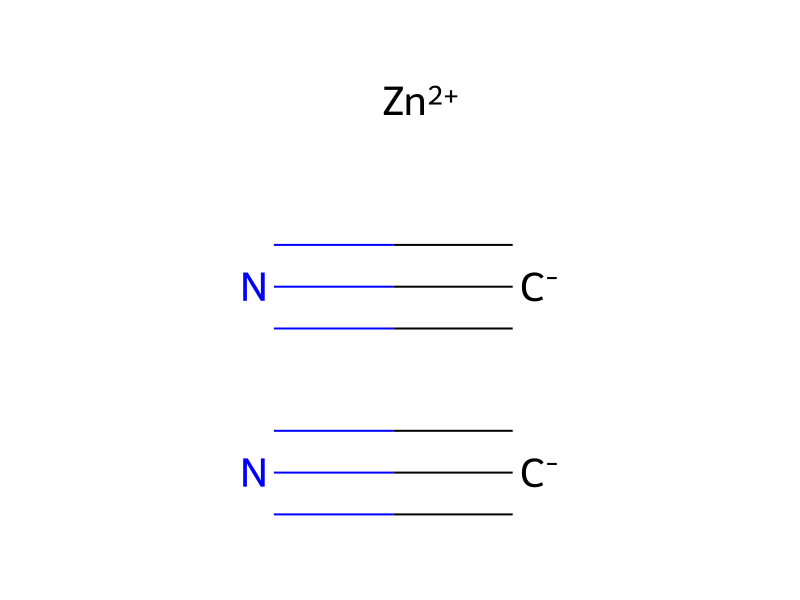
Br[C:2]1[CH:7]=[CH:6][C:5]([CH:8]2[O:12][CH2:11][CH2:10][O:9]2)=[CH:4][N:3]=1.[CH3:13][N:14](C=O)C>[C-]#N.[Zn+2].[C-]#N.C1C=CC([P]([Pd]([P](C2C=CC=CC=2)(C2C=CC=CC=2)C2C=CC=CC=2)([P](C2C=CC=CC=2)(C2C=CC=CC=2)C2C=CC=CC=2)[P](C2C=CC=CC=2)(C2C=CC=CC=2)C2C=CC=CC=2)(C2C=CC=CC=2)C2C=CC=CC=2)=CC=1>[C:13]([C:2]1[CH:7]=[CH:6][C:5]([CH:8]2[O:12][CH2:11][CH2:10][O:9]2)=[CH:4][N:3]=1)#[N:14]Participants
5




Conditions
- Temperature
- 80 °C
Procedure
2-Bromo-5-(1,3-dioxolan-2-yl)pyridine (895 mg, 3.89 mmol), zinc cyanide (1.14 g, 5.83 mmol) and tetrakis(triphenylphosphine)palladium (899 mg, 0.778 mmol) were dissolved in N,N-dimethylformaldehyde (30 ml) and the mixture was heated to reflux at 80° C. under a nitrogen atmosphere for 12 hours. The reaction mixture was concentrated, water was added thereto, and extraction with ethyl acetate was performed, followed by washing with brine and drying over anhydrous sodium sulfate. The solvent was evaporated off under reduced pressure, and the residue was purified by column chromatography (hexane/ethyl acetate=7/3) to give 2-cyano-5-(1,3-dioxolan-2-yl)pyridine (506 mg, yield: 74%).
Workup
- temperaturethe mixture was heated
- concentrationThe reaction mixture was concentrated
- additionwater was added
- extractionextraction with ethyl acetate
- washby washing with brine
- dry with materialdrying over anhydrous sodium sulfate
- customThe solvent was evaporated off under reduced pressure
- customthe residue was purified by column chromatography (hexane/ethyl acetate=7/3)
Sources & evidence
- ORD record
- ord-a5ba6289b800431695f6b82e29b79c1c
- Source dataset
- uspto-grants-2014_03
- Patent number
- US08673908B2
Reaction notes
Loading…