Hydrochloric Acid → 1,2,3,4-Tetrahydro-1,4-methanonaphthalene-5-boronic Acid
Reaction equation

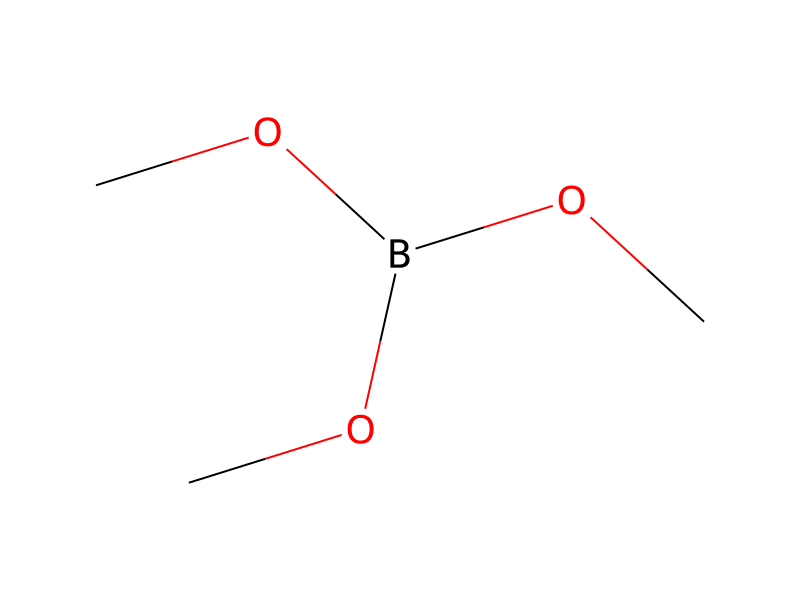
C([Li])CCC.Br[C:7]1[CH:16]=[CH:15][CH:14]=[C:13]2[C:8]=1[CH:9]1[CH2:17][CH:12]2[CH2:11][CH2:10]1.[B:18](OC)([O:21]C)[O:19]C.Cl>C1COCC1.C(OC)(C)(C)C>[CH:12]12[CH2:17][CH:9]([C:8]3[C:7]([B:18]([OH:21])[OH:19])=[CH:16][CH:15]=[CH:14][C:13]=31)[CH2:10][CH2:11]2Participants
Reactant 4



Product 1

Reagents, catalysts & solvents 2


Conditions
- Temperature
- -78 °C
Procedure
100 ml (250 mmol) of n-butyllithium (2.5M in hexane) are added dropwise to a solution, cooled to −78° C., of 44.6 g (200 mmol) of 5-bromo-1,2,3,4-tetrahydro-1,4-methanonaphthalene in 500 ml of THF. The reaction mixture is stirred at −78° C. for 1 h, and a mixture of 33.5 ml (300 mmol) of trimethyl borate in 50 ml of THF is then added rapidly. After warming to −10° C., the mixture is hydrolysed using 10 ml of 2.5M hydrochloric acid, and 500 ml of methyl tert-butyl ether are then added. The organic phase is separated off, washed with water, dried over sodium sulfate and evaporated to dryness. The residue is taken up in 200 ml of n-heptane, and the colourless solid is filtered off with suction, washed with n-heptane and dried under reduced pressure. Yield: 24.1 g (128 mmol), 64.1% of theory; purity: 98% according to 1H-NMR.
Workup
- additionis then added rapidly
- temperatureAfter warming to −10° C.
- additionare then added
- customThe organic phase is separated off
- washwashed with water
- dry with materialdried over sodium sulfate
- customevaporated to dryness
- filtrationthe colourless solid is filtered off with suction
- washwashed with n-heptane
- customdried under reduced pressure
Sources & evidence
- ORD record
- ord-7270a87a137744ed9fe879277131339f
- Source dataset
- uspto-grants-2014_03
- Patent number
- US08679645B2
Reaction notes
Loading…