2,2'-Bipyridine → 4-Bromo-1-cyclopropylpyridin-2(1H)-one
Reaction equation

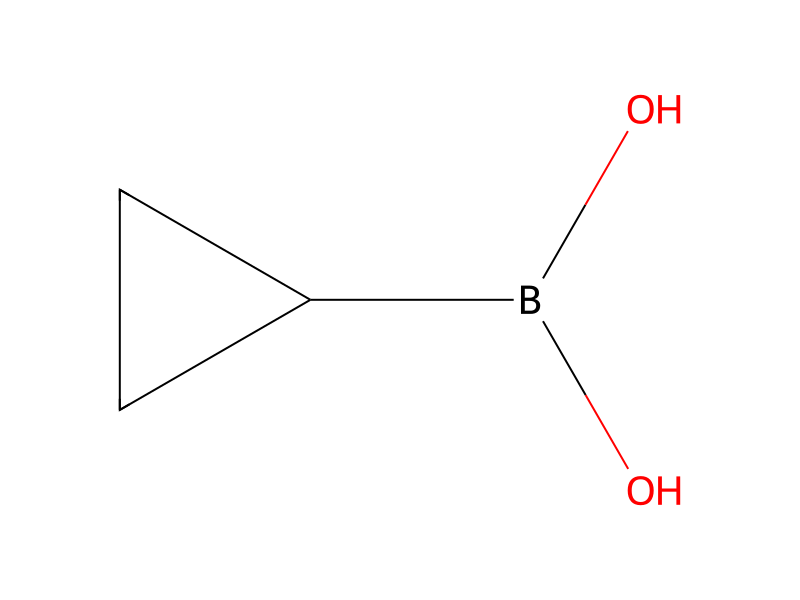
[Br:1][C:2]1[CH:7]=[CH:6][NH:5][C:4](=[O:8])[CH:3]=1.[CH:9]1(B(O)O)[CH2:11][CH2:10]1.N1C=CC=CC=1C1C=CC=CN=1.C([O-])([O-])=O.[Na+].[Na+].[NH4+].[Cl-]>CC([O-])=O.CC([O-])=O.[Cu+2].ClCCCl>[Br:1][C:2]1[CH:7]=[CH:6][N:5]([CH:9]2[CH2:11][CH2:10]2)[C:4](=[O:8])[CH:3]=1Participants
Reactant 5




Product 1

Reagents, catalysts & solvents 2


Procedure
A flask charged with a stir bar, 4-bromo-1H-pyridin-2-one (1.80 g), cyclopropylboronic acid (2.00 g), Cu(OAc)2 (2.00 g), 2,2′-bipyridine (1.70 g), Na2CO3 (2.47 g), and 1,2-dichloroethane (75 mL) was heated to 70° C. and the mixture was stirred at this temperature in air overnight. Then, another portion of cyclopropylboronic acid (0.50 g) and Na2CO3 (0.55 g) were added and the mixture was further stirred at reflux temperature for another 4 h. After cooling to ambient temperature, aqueous NH4Cl solution was added and the resultant mixture was extracted with dichloromethane. The combined organic extracts were dried (MgSO4) and the solvent was evaporated. The residue was purified by chromatography on silica gel (cyclohexane/ethyl acetate 50:50->35:65) to afford the title compound as an oil that crystallized on standing. Yield: 0.82 g (37% of theory); Mass spectrum (ESI+): m/z=214/216 (Br) [M+H]+.
Workup
- additionA flask charged with a stir bar
- stirringthe mixture was further stirred
- temperatureat reflux temperature for another 4 h
- extractionthe resultant mixture was extracted with dichloromethane
- dry with materialThe combined organic extracts were dried (MgSO4)
- customthe solvent was evaporated
- customThe residue was purified by chromatography on silica gel (cyclohexane/ethyl acetate 50:50->35:65)
Sources & evidence
- ORD record
- ord-6ff25ae780ef447883d6cbc87d30b323
- Source dataset
- uspto-grants-2014_03
- Patent number
- US08680093B2
Reaction notes
Loading…