1-Bromooctane → 4-(Octyloxy)benzoic acid
Reaction equation

[OH:1][C:2]1[CH:12]=[CH:11][C:5]([C:6]([O:8]CC)=[O:7])=[CH:4][CH:3]=1.[CH2:13](Br)[CH2:14][CH2:15][CH2:16][CH2:17][CH2:18][CH2:19][CH3:20]>>[CH2:13]([O:1][C:2]1[CH:3]=[CH:4][C:5]([C:6]([OH:8])=[O:7])=[CH:11][CH:12]=1)[CH2:14][CH2:15][CH2:16][CH2:17][CH2:18][CH2:19][CH3:20]Participants
3
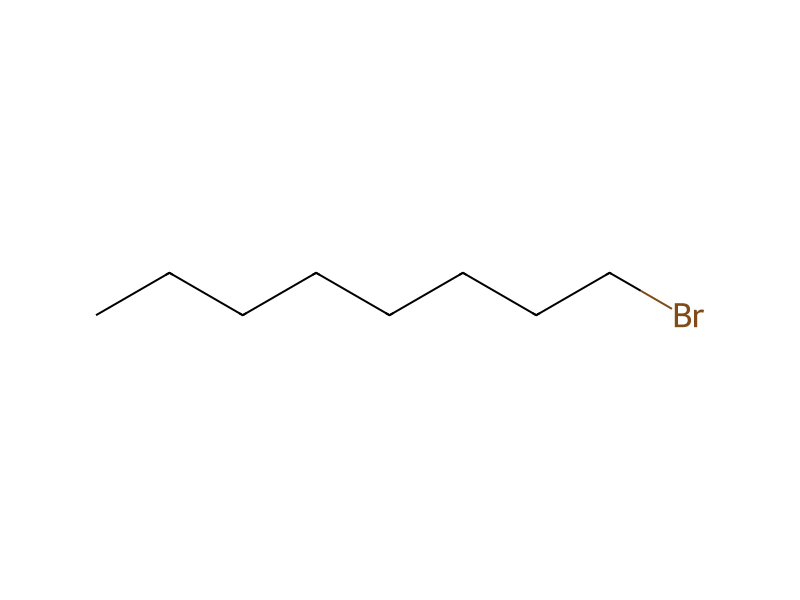


Procedure
Using ethyl p-hydroxybenzoate (36.7 g, 0.22 mol) and n-octyl bromide (50 g, 0.26 mol), the reaction was carried out in the same manner as described in Example 13, (1), and then recrystallized from ethanol to give the title compound as a white micro-needles; yield: 43.0 g (71.6%); mp 100.2°-101.4° C. (the 1st mp), 107.0°-107.6° C. (the 2nd mp).
Workup
- customrecrystallized from ethanol
Sources & evidence
- ORD record
- ord-5268acb96c274bdfbf9a4b1e0ca086ff
- Source dataset
- uspto-grants-1992_05
- Patent number
- US05114615
Reaction notes
Loading…