Hydrogen Peroxide → 9H-carbazole-9-hexanol
Reaction equation

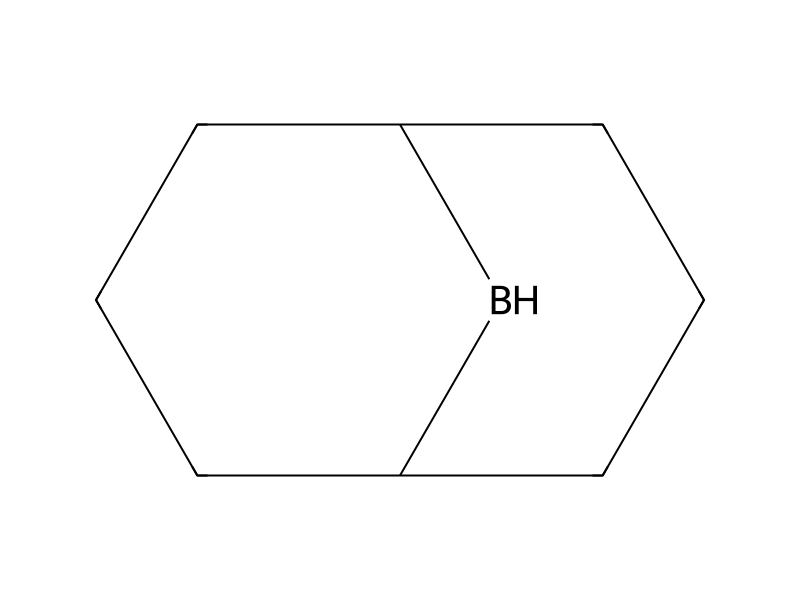
C12BC(CCC1)CCC2.[CH2:10]([N:16]1[C:28]2[CH:27]=[CH:26][CH:25]=[CH:24][C:23]=2[C:22]2[C:17]1=[CH:18][CH:19]=[CH:20][CH:21]=2)[CH2:11][CH2:12][CH2:13][CH:14]=[CH2:15].[OH-:29].[Na+].OO>O1CCCC1.O.C(O)C>[OH:29][CH2:15][CH2:14][CH2:13][CH2:12][CH2:11][CH2:10][N:16]1[C:17]2[CH:18]=[CH:19][CH:20]=[CH:21][C:22]=2[C:23]2[C:28]1=[CH:27][CH:26]=[CH:25][CH:24]=2Participants







Procedure
200 ml of a solution of 9-borabicyclo[3.3.1]-nonane (9-BBN) in tetrahydrofuran (0.5 mol/1) were initially taken in a thoroughly heated 500 ml three-necked flask. After the dropwise addition of a solution of 100 mmol of N-5-hexenylcarbazole in 100 ml of dry tetrahydrofuran, the mixture was stirred for 3 hours at room temperature, after which 60 ml of ethanol, 20 ml of 6 N sodium hydroxide solution and 40 ml of hydrogen peroxide (30% strength) were added in succession. Refluxing was carried out for 1 hour, after which the reaction mixture was worked up by adding 200 ml of water and then stripping off the tetrahydrofuran. The resulting N-(6-hydroxyhexyl)-carbazole was extracted with ether, the ether extract was dried and the ether was evaporated. The resulting crude product was then recrystallized from 9:1 hexane/acetone. The pure N-(6-hydroxyhexyl)-carbazole obtained in 61% yield was in the form of white crystals.
Workup
- temperatureRefluxing
- waitwas carried out for 1 hour
- extractionThe resulting N-(6-hydroxyhexyl)-carbazole was extracted with ether
- extractionthe ether extract
- customwas dried
- customthe ether was evaporated
- customThe resulting crude product was then recrystallized from 9:1 hexane/acetone
Sources & evidence
- ORD record
- ord-df428bf53f2c4b15a89509fb7e3ef617
- Source dataset
- uspto-grants-1992_05
- Patent number
- US05116911
Reaction notes
Loading…