Hydrochloric Acid → 5-Carboxy-2-(4,5-dihydro-2-thiazolyl)-pyridine
Reaction equation

[Na].[C:2]([C:5]1[CH:6]=[CH:7][C:8]([C:11]#[N:12])=[N:9][CH:10]=1)([OH:4])=[O:3].N[CH2:14][CH2:15][SH:16].Cl>O.C(O)C>[C:2]([C:5]1[CH:6]=[CH:7][C:8]([C:11]2[S:16][CH2:15][CH2:14][N:12]=2)=[N:9][CH:10]=1)([OH:4])=[O:3]Participants
7






Procedure
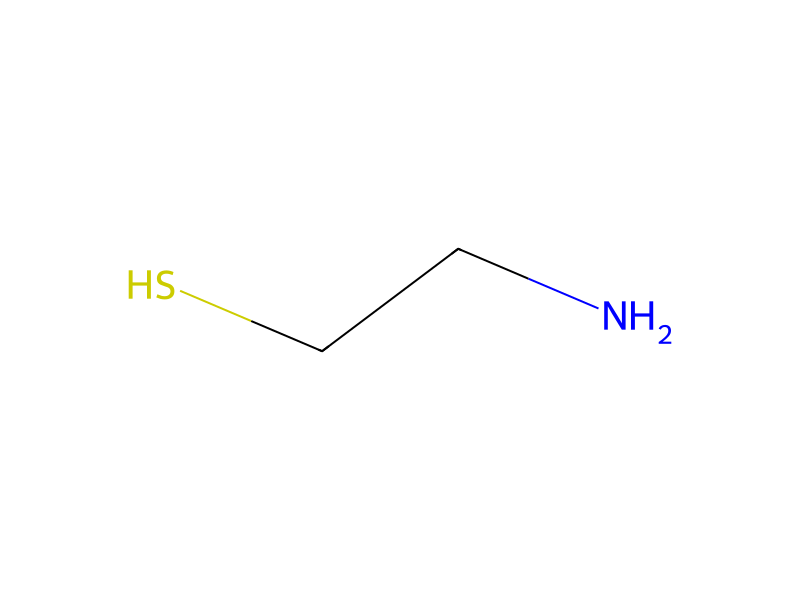
Sodium (11 mmol) is added to a flask containing 75 ml of ethanol. As soon as the sodium has dissolved, 10 mmol of 5-carboxy-2-cyanopyridine and 11 mmol of 2-amino-ethanethiol are added and the solution is refluxed for 24 h. The solution is then diluted with 25 ml of water, made acidic (pH=5) with 2N HCl and evaporated. The residue is dissolved in 100 ml of hot chloroform, the salts are filtered off and the filtrate on cooling gives crystals of the title compound, m.p. 234°-235° C.
Workup
- temperaturethe solution is refluxed for 24 h
- customevaporated
- dissolutionThe residue is dissolved in 100 ml of hot chloroform
- filtrationthe salts are filtered off
- temperaturethe filtrate on cooling
Sources & evidence
- ORD record
- ord-143d865299da42c986d2a696924ac583
- Source dataset
- uspto-grants-1990_02
- Patent number
- US04904675
Reaction notes
Loading…