Hydrochloric Acid → 1-Butyryl-1-(4-chlorophenyl)cyclobutane
Reaction equation

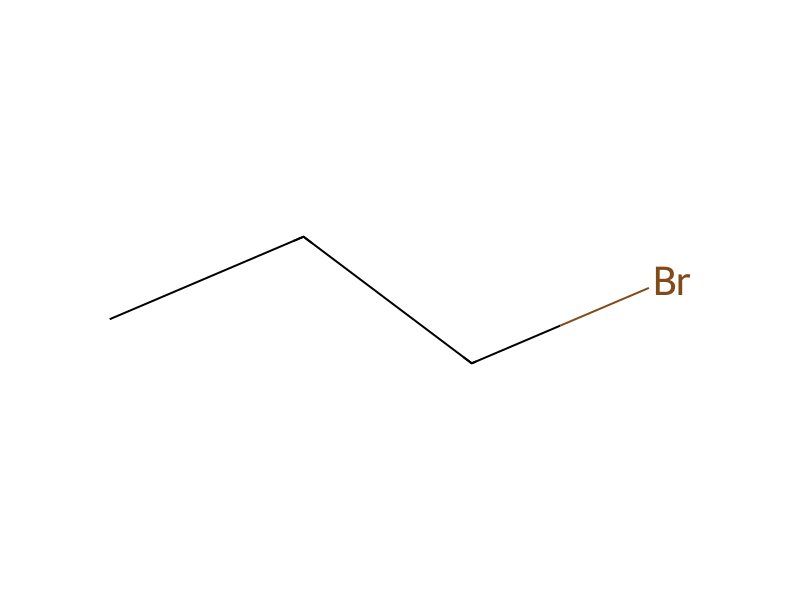
[Cl:1][C:2]1[CH:7]=[CH:6][C:5]([C:8]2([C:12]#N)[CH2:11][CH2:10][CH2:9]2)=[CH:4][CH:3]=1.Cl[C:15]1C=C(C2(C#N)CCC2)C=[CH:19][C:20]=1Cl.[Mg].C(Br)CC.Cl.CC[O:36]CC>O1CCCC1>[C:12]([C:8]1([C:5]2[CH:6]=[CH:7][C:2]([Cl:1])=[CH:3][CH:4]=2)[CH2:11][CH2:10][CH2:9]1)(=[O:36])[CH2:15][CH2:20][CH3:19]Participants
8
Reactant 6





Product 1

Reagents, catalysts & solvents 1

Procedure
1-(4-Chlorophenyl)-1-cyclobutanecarbonitrile (15 g) prepared in a similar manner to the 1-(3,4-dichlorophenyl)cyclobutanecarbonitrile of Example 1 in dry ether (50 ml) was added to the product of the reaction between magnesium turnings (3.18 g) and propyl bromide (15.99 g) in dry ether (50 ml). The ether was replaced by tetrahydrofuran and the mixture heated with stirring under reflux for eighteen hours. The mixture was cooled and ice and then concentrated hydrochloric acid (52 ml) added. The resulting mixture was stirred under reflux for ten hours and extracted with ether. The ether extract yielded a residue from which 1-butyryl-1-(4-chlorophenyl)cyclobutane (b.p. 106°-108°/0.3 mm Hg) was distilled.
Workup
- temperaturethe mixture heated
- temperatureunder reflux for eighteen hours
- temperatureThe mixture was cooled
- stirringThe resulting mixture was stirred
- temperatureunder reflux for ten hours
- extractionextracted with ether
- extractionThe ether extract
Sources & evidence
- ORD record
- ord-3069d45ca5394b51835fc72a7a9a38b6
- Source dataset
- uspto-grants-1988_05
- Patent number
- US04746680
Reaction notes
Loading…