Ethylene Glycol → 2-Hydroxyethyl 2-Bromopropionate
Reaction equation

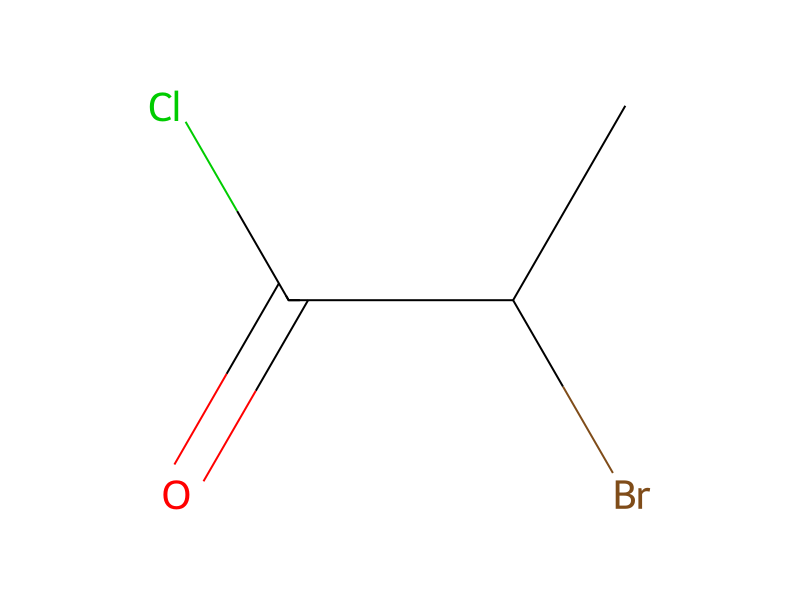
[Br:1][CH:2]([CH3:6])[C:3](Cl)=[O:4].[CH2:7]([OH:10])[CH2:8][OH:9].N1C=CC=CC=1.Cl>C(OCC)(=O)C.C1COCC1>[Br:1][CH:2]([CH3:6])[C:3]([O:9][CH2:8][CH2:7][OH:10])=[O:4]Participants






Procedure
In a nitrogen atmosphere, 2-bromopropionyl chloride (2 mL, 3.35 g, 19.5 mmol) was slowly added dropwise at 0° C. to a THF solution (10 mL) containing ethylene glycol (10.9 mL, 195 mmol) and pyridine (3 g, 39 mmol). The resulting solution was stirred at the same temperature for 2 hours. Dilute hydrochloric acid and ethyl acetate were added and mixture was allowed to separate into two phases. The organic phase was washed with dilute hydrochloric acid and brine, and dried over Na2SO4. The volatile matter was distilled off under reduced pressure and a crude product (3.07 g) was obtained. This crude product was distilled under reduced pressure (70-73° C., 0.5 mm Hg) to give hydroxyethyl 2-bromopropionate (2.14 g, 56%) represented by the following formula:
Workup
- customto separate into two phases
- washThe organic phase was washed with dilute hydrochloric acid and brine
- dry with materialdried over Na2SO4
- distillationThe volatile matter was distilled off under reduced pressure
- customa crude product (3.07 g) was obtained
- distillationThis crude product was distilled under reduced pressure (70-73° C., 0.5 mm Hg)
Sources & evidence
- ORD record
- ord-b6f30ad298c743158692b94720ce8fa2
- Source dataset
- uspto-grants-2003_04
- Patent number
- US06552118B2
Reaction notes
Loading…