4-Bromoanisole → Bis(4-methoxyphenyl)-2,4,5-trimethylphenylphosphine oxide
Reaction equation

[Mg].Br[C:3]1[C:4]([CH3:11])=[CH:5][C:6]([CH3:10])=[C:7]([CH3:9])[CH:8]=1.Br[C:13]1[CH:18]=[CH:17][C:16]([O:19][CH3:20])=[CH:15][CH:14]=1.[O:21]=[P:22](Cl)(Cl)Cl>C1COCC1.BrCCBr>[CH3:20][O:19][C:16]1[CH:17]=[CH:18][C:13]([P:22](=[O:21])([C:13]2[CH:18]=[CH:17][C:16]([O:19][CH3:20])=[CH:15][CH:14]=2)[C:3]2[CH:8]=[C:7]([CH3:9])[C:6]([CH3:10])=[CH:5][C:4]=2[CH3:11])=[CH:14][CH:15]=1Participants
Reactant 4
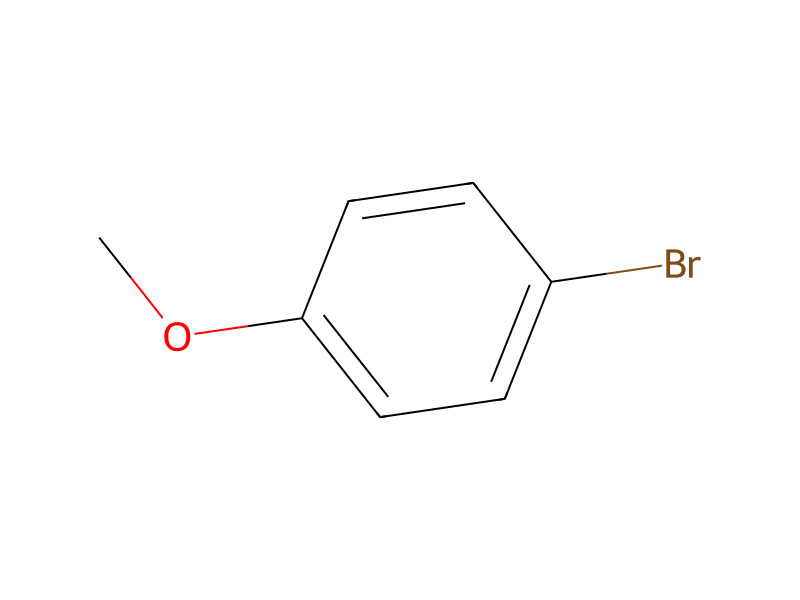



Product 1

Reagents, catalysts & solvents 2


Procedure
A reaction flask under nitrogen containing magnesium turnings (120 g, 4.94 mol) and 412 mL THF was charged with 0.5 g of 1,2-dibromoethane and heated to reflux for 1 h. A separate flask was charged with 5-bromo-1,2,4-trimethylbenzene (300 g, 1.51 mol), dissolved in 568 mL of THF. The heat was removed from the first flask and the 5-bromo-1,2,4-trimethylbenzene solution was added dropwise at a rate to maintain reflux. 4-Bromoanisole (536.7 g, 3.01 mol) was then added over 1.5 h at 75° C. reaction temperature. After holding the reaction mixture overnight, POCl3 (231 g, 1.51 mol) was added dropwise at 40–80° C. The product mixture was isolated by aqueous workup to give 453.6 g (79% yield) of product mixture as a viscous liquid. The structure was consistent with NMR data.
Workup
- temperatureheated
- temperatureto reflux for 1 h
- customThe heat was removed from the first flask
- additionthe 5-bromo-1,2,4-trimethylbenzene solution was added dropwise at a rate
- temperatureto maintain
- temperaturereflux
- customreaction temperature
- additionwas added dropwise at 40–80° C
- customThe product mixture was isolated by aqueous workup
Sources & evidence
- ORD record
- ord-0f8df7058c40437291a7991d030156dd
- Source dataset
- uspto-grants-2007_04
- Patent number
- US07202311B2
Reaction notes
Loading…