Sodium Chlorate → HCID 68803290, compound
Reaction equation

[CH2:1]1[CH2:6][CH2:5][CH:4]([CH2:7][C:8]([NH:10][C:11]2[CH:16]=[CH:15][CH:14]=[CH:13][CH:12]=2)=[O:9])[CH2:3][CH2:2]1.[Cl:17]([O-])(=O)=O.[Na+].S(=O)(O)[O-].[Na+]>Cl.C(O)(=O)C.O>[Cl:17][CH:2]1[CH2:3][CH:4]([CH2:7][C:8]([NH:10][C:11]2[CH:12]=[CH:13][CH:14]=[CH:15][CH:16]=2)=[O:9])[CH2:5][CH2:6][CH2:1]1Participants
7
Reactant 3
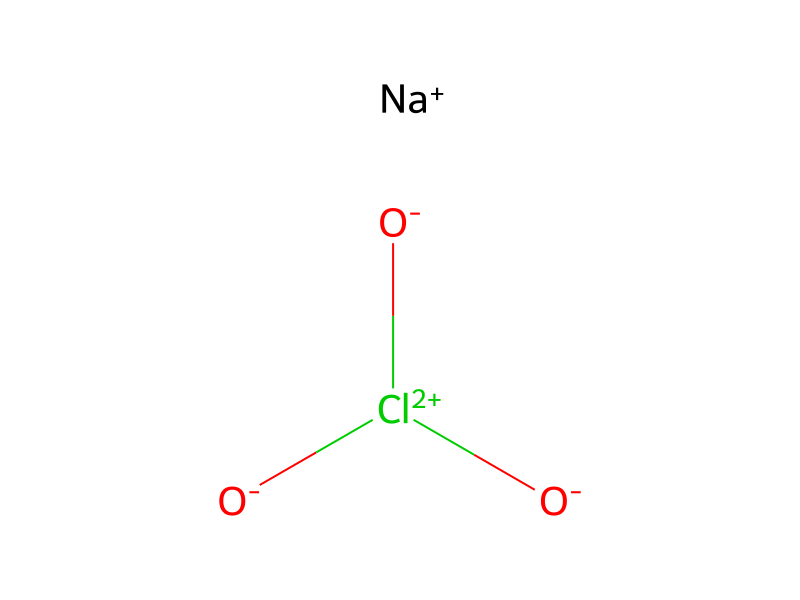


Product 1

Reagents, catalysts & solvents 3



Procedure
4-Cyclohexylacetanilide (24 g, 110 mmol) is dissolved in a mixture of concentrated HCl (25 mL) and acetic acid (75 mL). The mixture is cooled in an ice bath and a solution of sodium chlorate (NaClO3, 7.5 g, 70 mmol) in water (30 mL) is added via a dropping funnel. The reaction is allowed to warm to room temperature and then poured into saturated sodium bisulfite solution (500 mL). The solid which forms is isolated by filtration and subsequently washed first with water (500 mL) and then a mixture of hexanes/Et2O (10:1, 500 mL). The resulting solid is air dried to yield 2-chloro-4-cyclohexylacetanilide (m.p. 110–112° C.).
Workup
- temperatureThe mixture is cooled in an ice bath
- customdried
Sources & evidence
- ORD record
- ord-5799d97428b14d8faba4b4ac81245470
- Source dataset
- uspto-grants-2007_04
- Patent number
- US07202364B2
Reaction notes
Loading…