Potassium Phosphate, Tribasic → 4-Cyclopropyl-2-chloro-3,5-difluoroaniline
Reaction equation

Br[C:2]1[C:8]([F:9])=[CH:7][C:5]([NH2:6])=[C:4]([Cl:10])[C:3]=1[F:11].[CH:12]1(B(O)O)[CH2:14][CH2:13]1.[O-]P([O-])([O-])=O.[K+].[K+].[K+].C1(P(C2CCCCC2)C2CCCCC2)CCCCC1>C1(C)C=CC=CC=1.O.CC([O-])=O.CC([O-])=O.[Pd+2]>[CH:12]1([C:2]2[C:8]([F:9])=[CH:7][C:5]([NH2:6])=[C:4]([Cl:10])[C:3]=2[F:11])[CH2:14][CH2:13]1Participants
8
Reactant 4

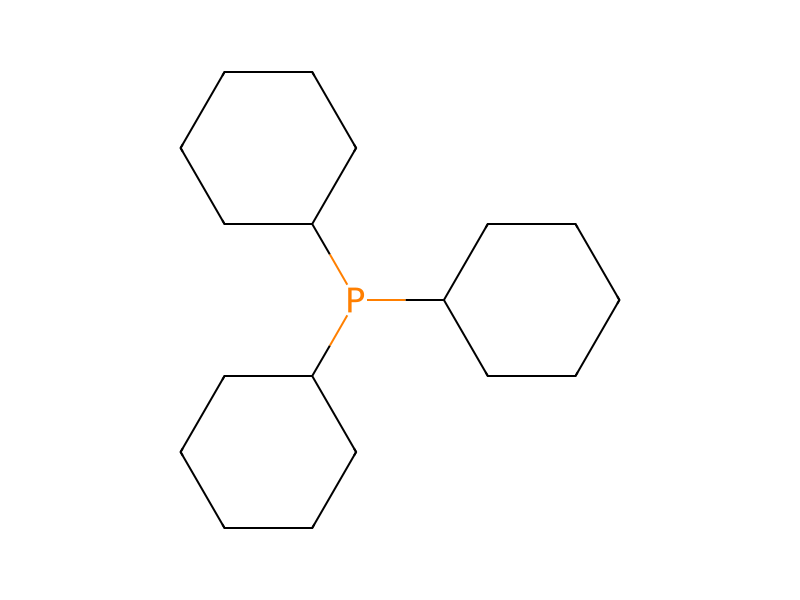
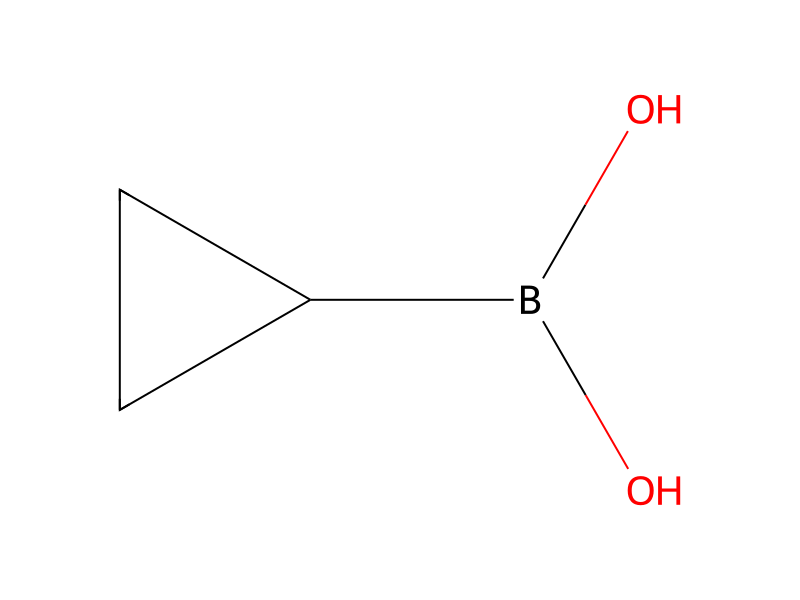

Product 1

Reagents, catalysts & solvents 3



Conditions
- Temperature
- 100 °C
Procedure
A mixture of 4-bromo-2-chloro-3,5-difluoroaniline (5.35 g, 22.0 mmol), cyclopropylboronic acid (2.20 g, 24.0 mmol), K3PO4 (16 g, 78 mmol) and tricyclohexyl phosphine (0.623 g, 2.24 mmol) in toluene (30 mL) and water (8 mL) is degassed with N2 and heated to 100° C. Pd(OAc)2 (0.25 g, 1.16 mmol) is added. The reaction mixture is heated to 100° C. overnight, cooled and loaded directly on a column of silica gel. The residue is purified by column chromatography (EtOAc/hexanes) to give 4-cyclopropyl-3,5-difluoro-2-chloroaniline.
Workup
- customis degassed with N2
- temperatureThe reaction mixture is heated to 100° C. overnight
- temperaturecooled
- customThe residue is purified by column chromatography (EtOAc/hexanes)
Sources & evidence
- ORD record
- ord-b937d98ed8b94148bb9dc3bd98cf28e0
- Source dataset
- uspto-grants-2007_04
- Patent number
- US07202364B2
Reaction notes
Loading…