Triethylamine → 2-bromo-N-(4-iodophenyl)acetamide
Reaction equation

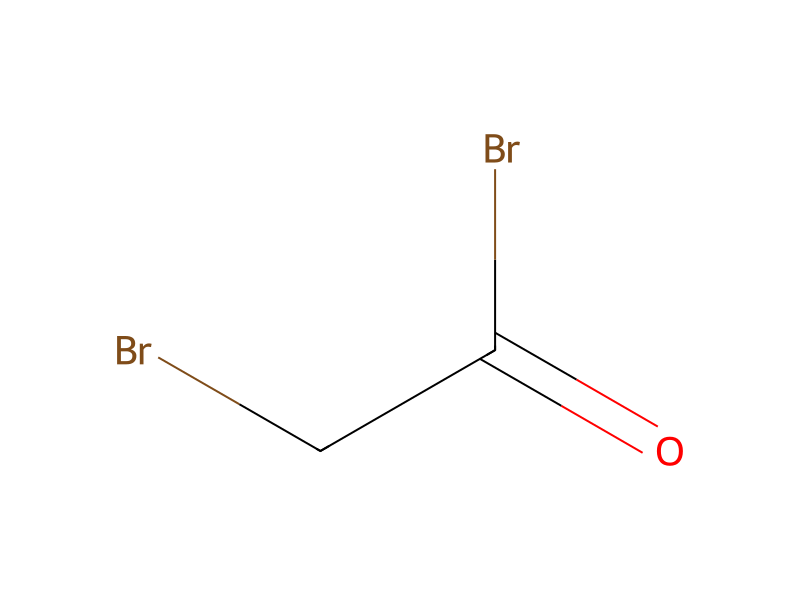
[I:1][C:2]1[CH:8]=[CH:7][C:5]([NH2:6])=[CH:4][CH:3]=1.[Br:9][CH2:10][C:11](Br)=[O:12].C(N(CC)CC)C>ClCCl>[Br:9][CH2:10][C:11]([NH:6][C:5]1[CH:7]=[CH:8][C:2]([I:1])=[CH:3][CH:4]=1)=[O:12]Participants
5
Reactant 3


Product 1

Reagents, catalysts & solvents 1

Procedure
To a solution of 4-iodoaniline (14.5 mmol) in anhydrous dichloromethane at 0° C. was added a-bromo-acetylbromide (1.4 mL) and triethylamine (15 mmol). The mixture was warmed to room temperature, stirred for 1 h, the solvent removed, and residue dissolved in 5% hydrochloric acid. The aqueous solution was extracted with ethyl acetate, the organic layer washed with brine, dried (Na2SO4), filtered, and evaporated. The solid residue was purified by recrystallization form ethyl acetate to afford the desired intermediate.
Workup
- customthe solvent removed
- dissolutionresidue dissolved in 5% hydrochloric acid
- extractionThe aqueous solution was extracted with ethyl acetate
- washthe organic layer washed with brine
- dry with materialdried (Na2SO4)
- filtrationfiltered
- customevaporated
- customThe solid residue was purified by recrystallization
- customform ethyl acetate
Sources & evidence
- ORD record
- ord-2231a9c5512a46028ee46899a2335ba0
- Source dataset
- uspto-grants-2007_04
- Patent number
- US07205403B2
Reaction notes
Loading…