N-Hydroxyphthalimide → N-(4-quinolyl)methoxyphthalimide
Reaction equation

[OH:1][CH2:2][C:3]1[C:12]2[C:7](=[CH:8][CH:9]=[CH:10][CH:11]=2)[N:6]=[CH:5][CH:4]=1.C1(P(C2C=CC=CC=2)C2C=CC=CC=2)C=CC=CC=1.O[N:33]1[C:37](=[O:38])[C:36]2=[CH:39][CH:40]=[CH:41][CH:42]=[C:35]2[C:34]1=[O:43].CCOC(/N=N/C(OCC)=O)=O>C1COCC1.CCOCC>[N:6]1[C:7]2[C:12](=[CH:11][CH:10]=[CH:9][CH:8]=2)[C:3]([CH2:2][O:1][N:33]2[C:34](=[O:43])[C:35]3=[CH:42][CH:41]=[CH:40][CH:39]=[C:36]3[C:37]2=[O:38])=[CH:4][CH:5]=1Participants
7
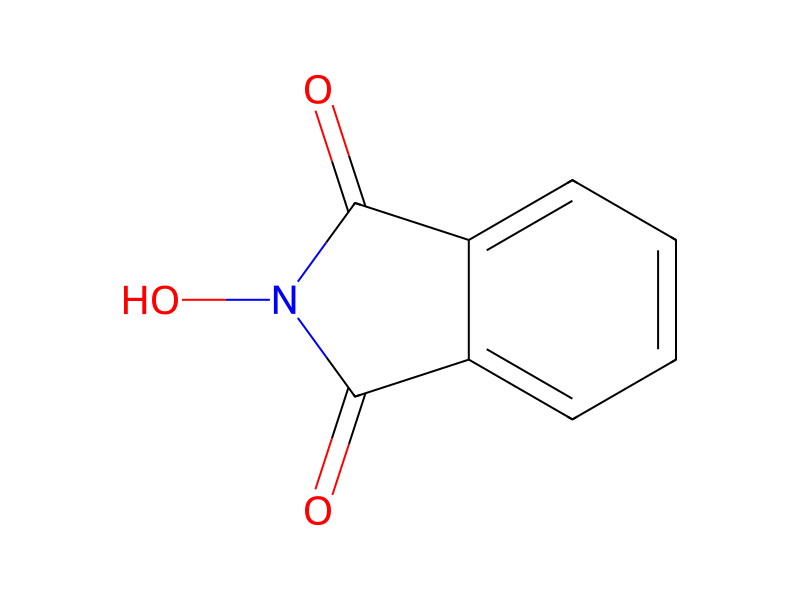






Procedure
4-(hydroxymethyl)quinoline (1.20 g, 7.55 mmol), triphenyl phosphine (2.27 g, 8.66 mmol, 1.15 equiv) and N-hydroxyphthalimide (1.42 g, 8.71 mmol, 1.15 equiv) were dissolved in 40 mL of dry THF. Diethylazodicarboxylate (1.44 mL, 9.15 mmol, 1.21 equiv) was then added dropwise and the reaction was stirred overnight. The reaction mixture was then diluted with 50 mL of Et2O and filtered. The resulting solid was dissolved in dichloromethane and washed with 1N NaOH, H2O and brine. The organic portion was dried over Na2SO4 and concentrated under reduced pressure to give the title compound (2.03 g) as a fluffy white solid. MS(CI) m/e 305 (M+H)+.
Workup
- filtrationfiltered
- dissolutionThe resulting solid was dissolved in dichloromethane
- washwashed with 1N NaOH, H2O and brine
- dry with materialThe organic portion was dried over Na2SO4
- concentrationconcentrated under reduced pressure
Sources & evidence
- ORD record
- ord-bf70735d378c4855abf68a9ef023c527
- Source dataset
- uspto-grants-2007_04
- Patent number
- USRE039591E1
Reaction notes
Loading…