Hydrochloric Acid → HCID 18472282, compound
Reaction equation

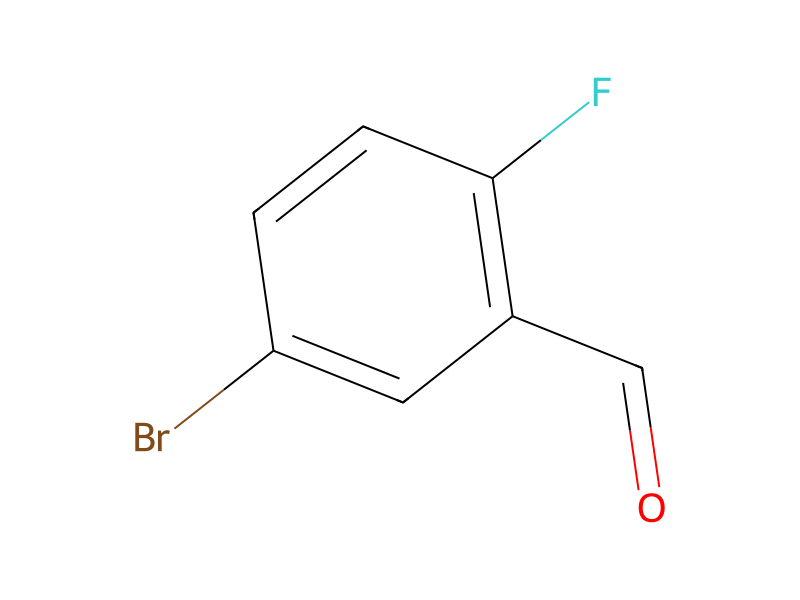
[Br:1][C:2]1[CH:3]=[CH:4][C:5](F)=[C:6]([CH:9]=1)[CH:7]=O.[SH:11][CH2:12][CH2:13][C:14]([O:16][CH2:17][CH3:18])=[O:15].C(=O)([O-])[O-].[K+].[K+].Cl>CN(C)C=O>[Br:1][C:2]1[CH:9]=[C:6]2[C:5](=[CH:4][CH:3]=1)[S:11][CH2:12][C:13]([C:14]([O:16][CH2:17][CH3:18])=[O:15])=[CH:7]2Participants





Procedure
To a solution of 5-bromo-2-fluorobenzaldehyde (0.49 g, 2.62 mmol) and ethyl 3-mercaptopropionate (0.37 ml, 2.88 mmol) in N,N-dimethylformamide (10 ml) was added potassium carbonate (0.90 g, 6.55 mmol), and the mixture was stirred at room temperature for 1 hour and then at 70° C. for 15 hours. The mixture was poured into ice-water, and made pH 4 with 1N hydrochloric acid. The aqueous layer was extracted with ethyl acetate, and the organic layer was washed with water and saturated brine, and dried with magnesium sulfate. The solvent was evaporated, and the residue was purified with silica gel column chromatography [hexane:ethyl acetate (5:1)] to give ethyl 6-bromo-2H-thiochromene-3-carboxylate (0.45 g, 58%) as yellow powder, a part of which was recrystallized from ethanol to give pale yellow needles.
Workup
- waitat 70° C. for 15 hours
- extractionThe aqueous layer was extracted with ethyl acetate
- washthe organic layer was washed with water and saturated brine
- dry with materialdried with magnesium sulfate
- customThe solvent was evaporated
- customthe residue was purified with silica gel column chromatography [hexane:ethyl acetate (5:1)]
Sources & evidence
- ORD record
- ord-c9cea760f0894569a9794fedfb1254d2
- Source dataset
- uspto-grants-2000_12
- Patent number
- US06166006
Reaction notes
Loading…