Phosphorus oxychloride → methyl 3-formyl-1H-indole-4-carboxylate
Reaction equation

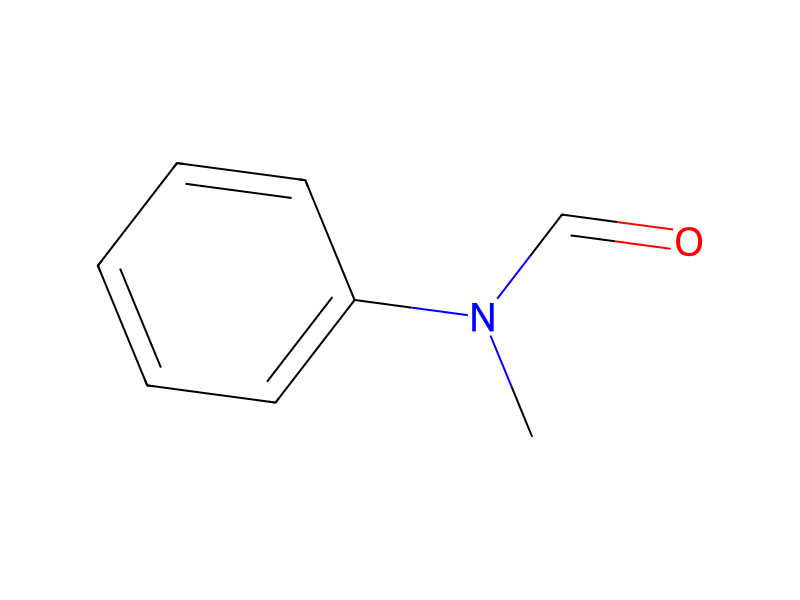
CN([CH:9]=[O:10])C1C=CC=CC=1.P(Cl)(Cl)(Cl)=O.[CH3:16][O:17][C:18]([C:20]1[C:21]2[CH:22]=[CH:23][NH:24][C:25]=2[CH:26]=[CH:27][CH:28]=1)=[O:19].C([O-])(=O)C.[Na+]>C(Cl)CCl>[CH3:16][O:17][C:18]([C:20]1[C:21]2[C:22]([CH:9]=[O:10])=[CH:23][NH:24][C:25]=2[CH:26]=[CH:27][CH:28]=1)=[O:19]Participants




Procedure
To a stirred mixture of N-methylformanilide (15.6 g) and phosphorus oxychloride (17.7 g) is added ethylene dichloride (75 g) followed by 4-indolecarboxylic acid methyl ester (17.5 g), described by F. C. Uhle, J. Amer. Chem. Soc., 71, 761 (1949). The reaction mixture is stirred at room temperature for 11/2 hr., then at 45° - 50°C for 30 minutes more. The mixture is now poured into a solution of 75 g of sodium acetate in 150 ml of ice-water. More ethylene dichloride is added. The layers are separated and the organic phase is washed with water, dried (Na2SO4) and evaporated under reduced pressure. The brown residue is treated repeatedly with boiling water from which the title compound separates on cooling. The title compound has mp 135°C.
Workup
- wait, then at 45° - 50°C for 30 minutes more
- customThe layers are separated
- washthe organic phase is washed with water
- dry with materialdried (Na2SO4)
- customevaporated under reduced pressure
- additionThe brown residue is treated repeatedly with boiling water from which the title compound separates
- temperatureon cooling
Sources & evidence
- ORD record
- ord-02049628775646969f3b4d8f3c9cc61c
- Source dataset
- uspto-grants-1976_08
- Patent number
- US03978066
Reaction notes
Loading…