Imidazole → HCID 86740589, compound
Reaction equation

[Cl:1][C:2]1[CH:10]=[C:9]([Cl:11])[CH:8]=[CH:7][C:3]=1[C:4](Cl)=[O:5].[N:12]1([CH2:17][CH2:18][OH:19])[CH:16]=[CH:15][N:14]=[CH:13]1.N1C=CN=C1.[C:25]1(=[O:30])[O:29]CCO1>C(#N)C.C(N(CC)CC)C>[C:25]([OH:29])(=[O:30])/[CH:7]=[CH:3]\[C:4]([OH:19])=[O:5].[Cl:1][C:2]1[CH:10]=[C:9]([Cl:11])[CH:8]=[CH:7][C:3]=1[C:4]([O:19][CH2:18][CH2:17][N:12]1[CH:16]=[CH:15][N:14]=[CH:13]1)=[O:5]Participants


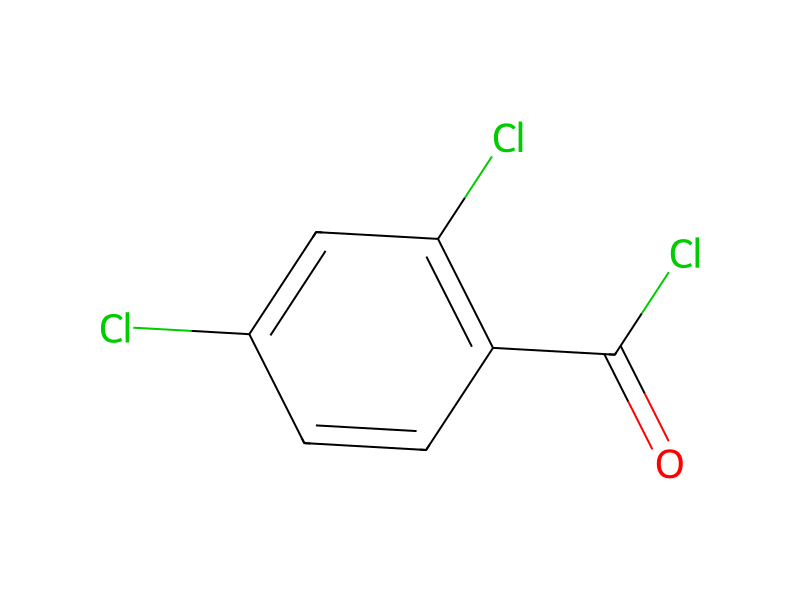




Procedure
11 g (0.05 mol) of 2,4-dichlorobenzoyl chloride were added dropwise to a mixture of 5.5 g (0.05 mol) of 1H-imidazole -1-ethanol [prepared from imidazole and ethylene carbonate by the process of British patent No. 939,681], 20 ml of triethylamine and 150 ml of acetonitrile. The reaction mixture was kept at about 80° C. for another 1.5 hours and then the solvent was evaporated. The residue was dissolved in a mixture of ethyl acetate and diethyl ether and was then extracted with water and subsequently with dilute hydrochloric acid. The acidic aqueous layer was made alkaline after which the base was taken up in ethyl acetate. The organic layer was extracted three times with water, dried and partly concentrated by evaporation. The residue was acidified with maleic acid and the 2-(1H-imidazol-1-yl)-ethyl 2,4-dichlorobenzoate (Z)-2-butenedioate (1:1) obtained was crystallized from a mixture of 2-propanol, acetone and diethyl ether to obtain the product with a melting point of 116-117° C.
Workup
- customthe solvent was evaporated
- dissolutionThe residue was dissolved in a mixture of ethyl acetate and diethyl ether
- extractionwas then extracted with water and subsequently with dilute hydrochloric acid
- extractionThe organic layer was extracted three times with water
- customdried
- concentrationpartly concentrated by evaporation
Sources & evidence
- ORD record
- ord-c2c6c427f42c411f8e0e52550ba6d28d
- Source dataset
- uspto-grants-1986_01
- Patent number
- US04563473
Reaction notes
Loading…